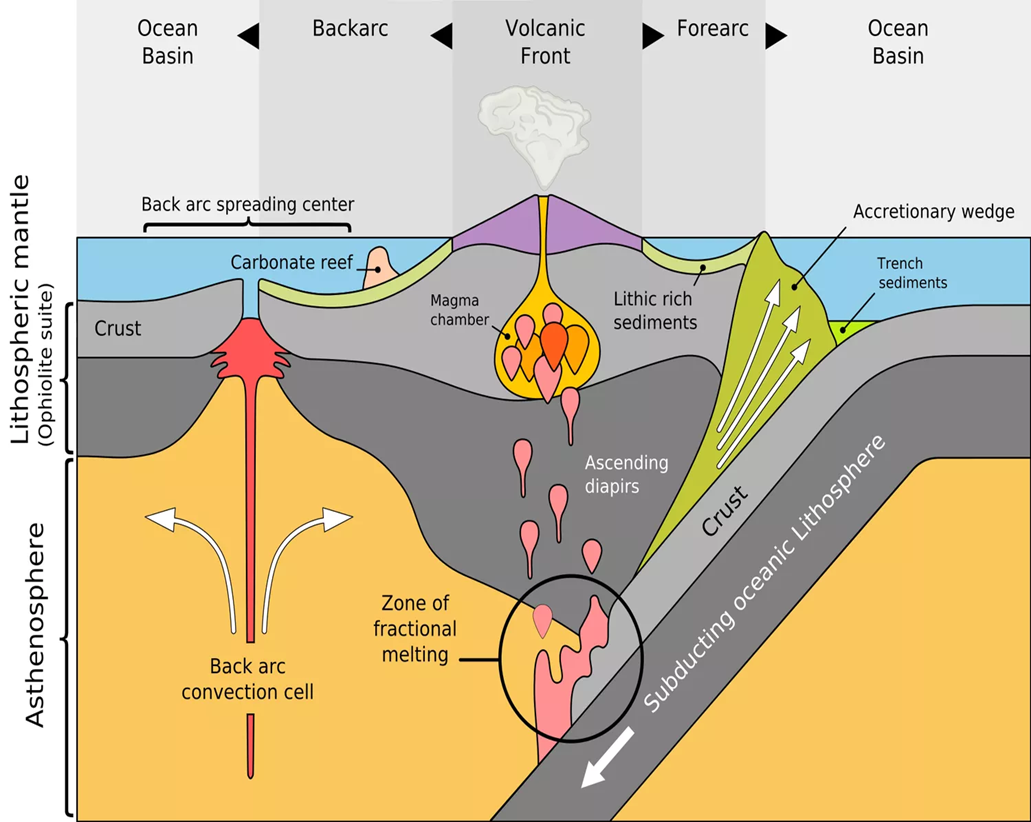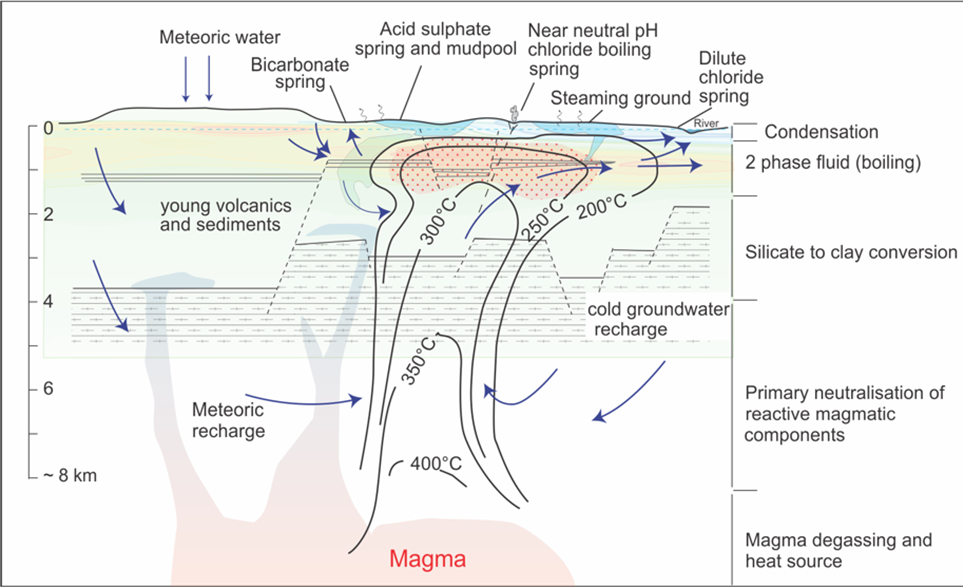
- Volcanic Geothermal Systems are frequently located associated with Convergent Zones where two lithospheric tectonic plates moving in opposing directions come in contact with each other. Oceanic lithosphere plates are thinner than continental plates, so it is easier for subduction to occur where one oceanic plate descends beneath the other (as shown at left).
- Oceanic subduction zones are typically characterised by four major features: (1) oceanic trench; (2) magmatic arc; (3) Wadati-Benioff zone (planar zone of seismicity); and (4) slab geometry of the deep subducted plate (pulling the hydrous oceanic lithosphere downwards and inducing material motions and thermal convection currents in the adjacent asthenosphere).
- The mantle wedge (above the subducting plate) is affected by the large amount of water in the subducting slab (due to hydrous minerals and percolation of seawater) that lowers the melting temperature of the mantle wedge. Fractional melting begins to depressurise and become less dense (so more buoyant than unmelted rock) and begins to rise upwards.
- Ascending magma moves upwards and may be supported for continuing magma production below providing pressure support to continue as geological conditions permit.
- Understanding how these subduction zones function helps progress a regional view of the energy potential at these locations.