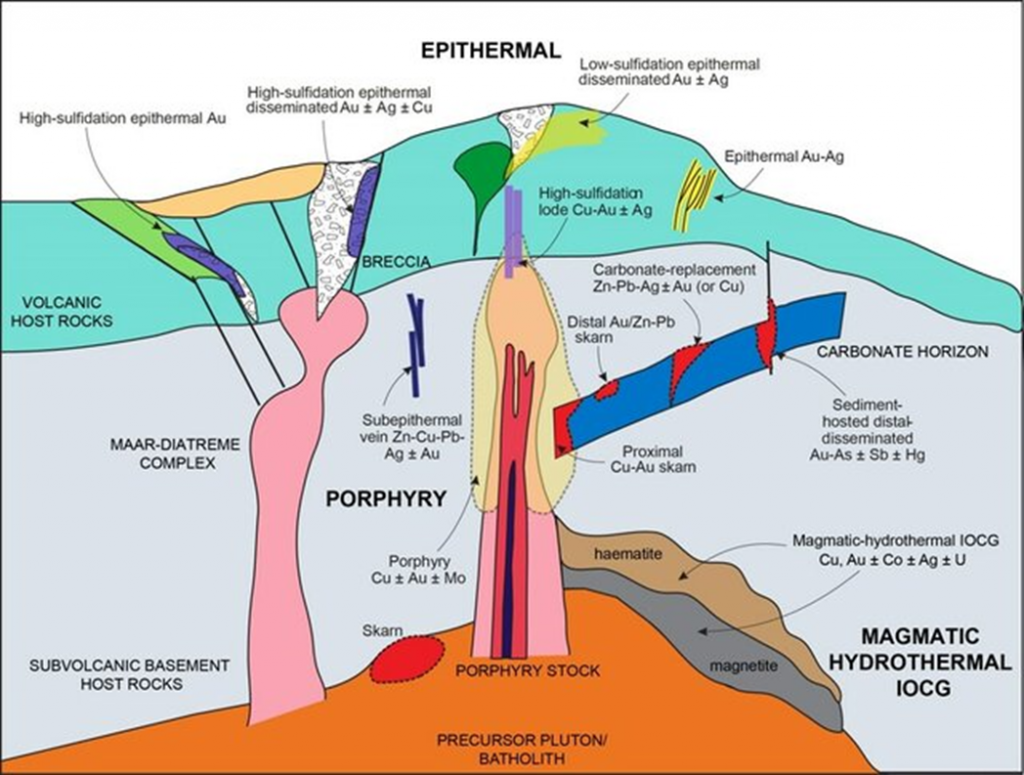
- Mineralisation deposits have been found in close proximity to volcanic systems, some of which with geothermal resources:
- El Salvador, Chile: Porphyry Cu deposit beneath an eroded Miocene volcanic complex — dacite intrusion only 1–2 km below vent in Palaeocene volcanic host rocks
- Lepanto, Philippines – ‘high sulfidation’ enargite-gold veins within the Manakayan volcanic complex that also hosts a number of other vein and porphyry copper deposits. No current geothermal surface manifestations in this system, but numerous active systems in similar volcanic structures.
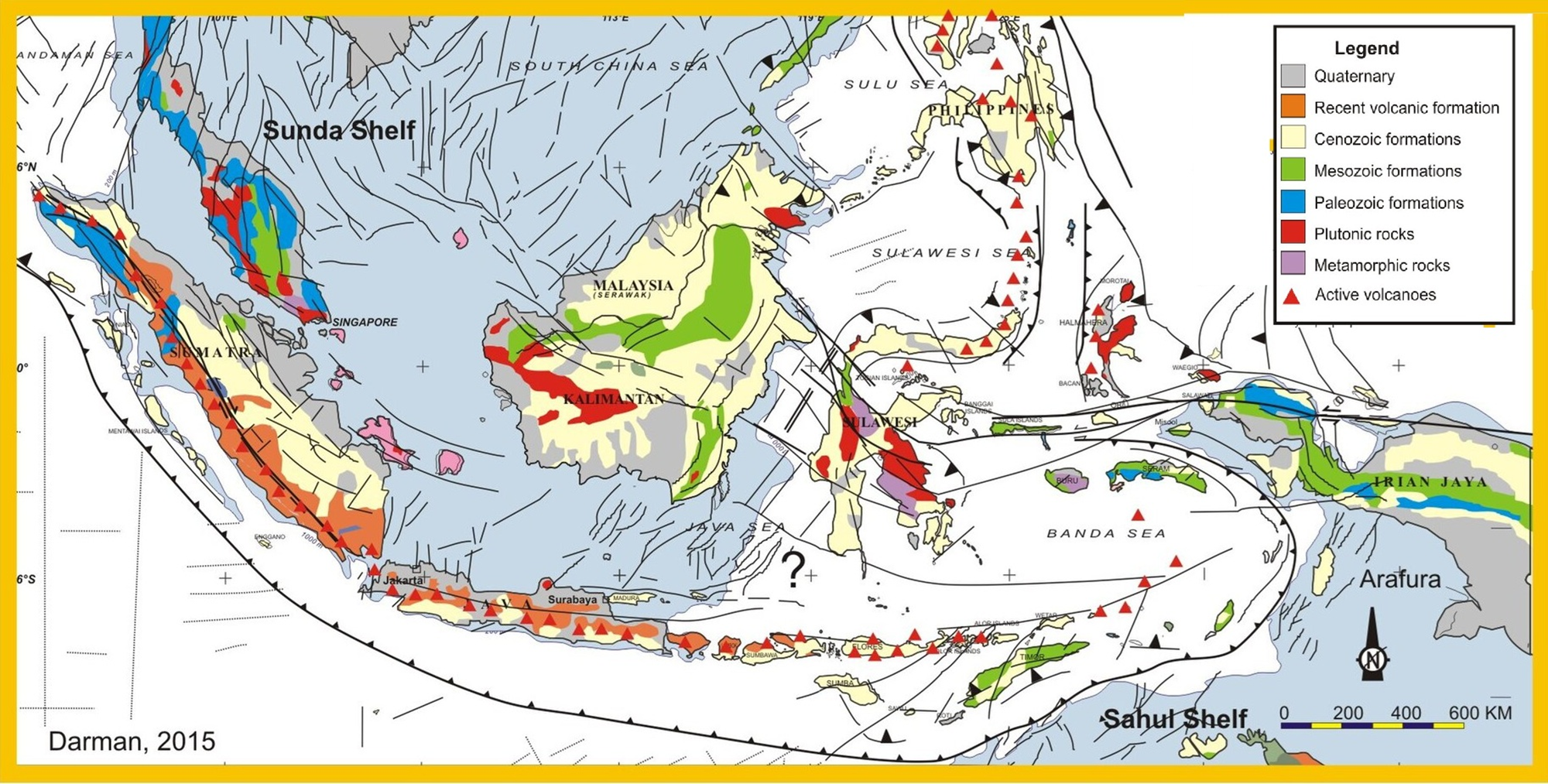
- Batu Hijau, Indonesia: Porphyry Cu–Au formed beneath volcanic cover; magmatic–hydrothermal fluids vented through volcanic structures.
- Yanacocha, Peru: Volcanic system is Miocene-age complex consisting of andesitic to dacitic lavas, pyroclastic rocks, domes, and dikes that intrude older volcanic units. Overlapping porphyry–epithermal system — porphyry at depth, high-sulfidation epithermal mineralisation above within 1–2 km vertical range. Geothermal energy is not being utilised, but was studied here and is being used across similar systems in Peru
- Lihir Island, PNG: gold deposit is an alkalic epithermal system hosted in breccias within the Luise caldera. The mineralization occurred in two main stages: an early porphyry stage with weak gold-copper mineralization and later epithermal mineralization, which forms the majority of the deposit. More details on Lihir are coming later in these slides.