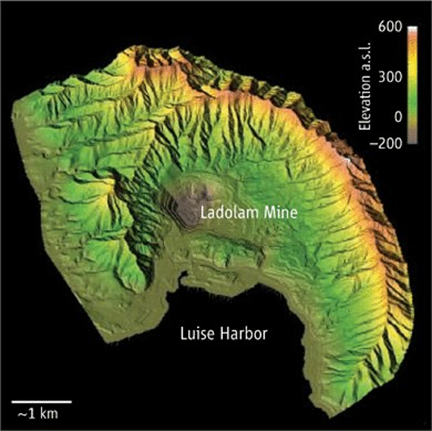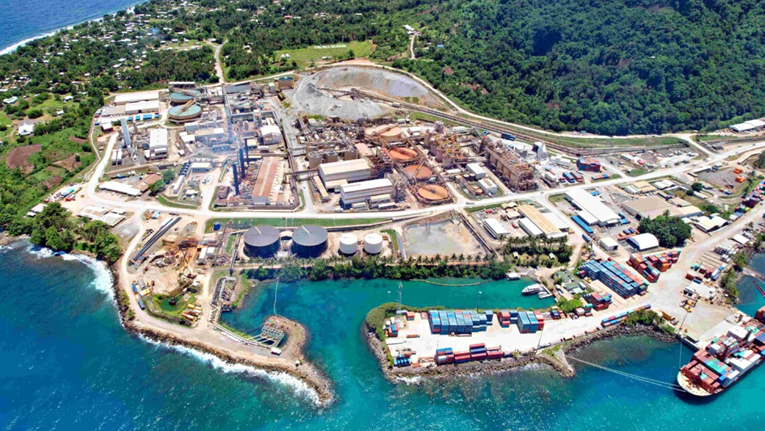
Lihir Mine on Lihir Island in Papua New Guinea required substantial facilities to support mining operations, processing, and all the associated site activities.
Lihir is an open-pit operation with two adjacent overlapping pits. The mining fleet includes large shovels and haul trucks. Ore processing involves crushing, grinding, flotation, pressure oxidation, and conventional leaching to recover gold. The processing plant has a capacity exceeding 15 million tonnes per annum, with upgrades to improve output, reduce costs, and increase gold recoveries.
- Operations are performed using a heavy equipment fleet consisting of 7 shovels and 49 haul trucks, with payloads ranging from 85t to 135t
- Processing consists of crushing and grinding followed by partial flotation, pressure oxidation and recovery of gold from washed oxidised slurry using conventional cyanidation.
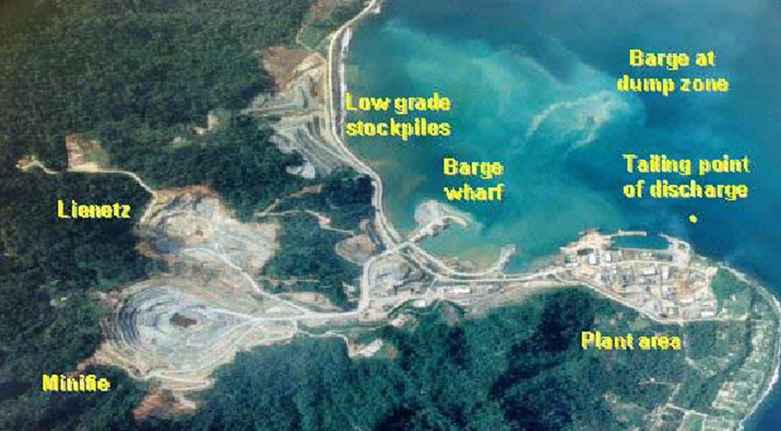
- Wastewater effluent from processing is discharged through a pipeline to an offshore water depth of 125m ~1.5km from shore
- Mine tailings are managed with four barges, transporting waste rock with placement by dumping in a deepwater location ~1km offshore.
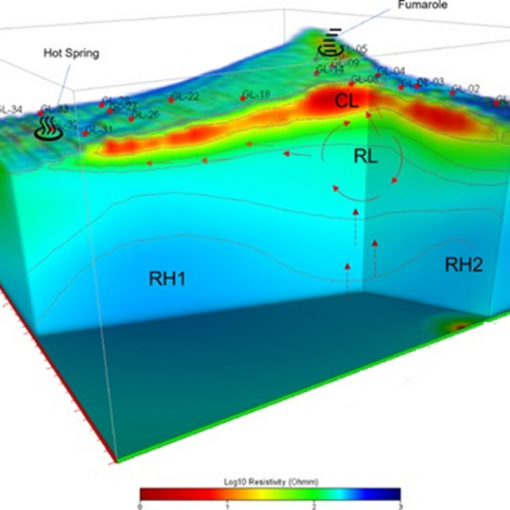
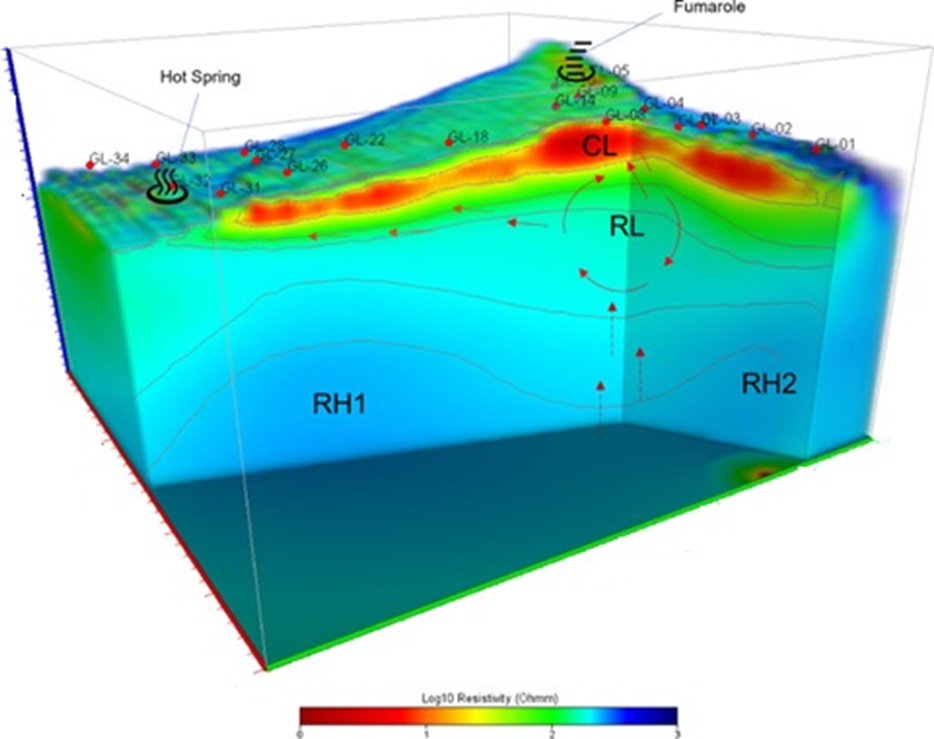
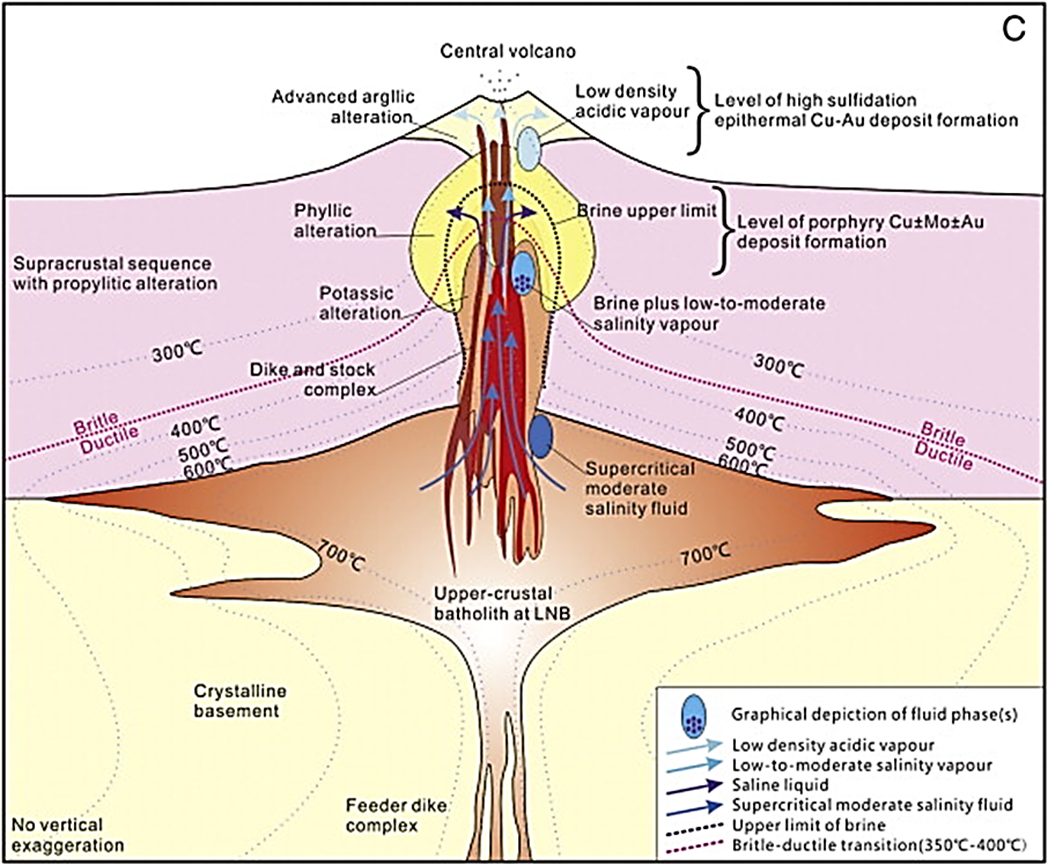
- Power demand for processing ~115MW (~130MW peak) was met with a combination of heavy fuel oil (HFO) and geothermal energy. Initial geothermal power plant of 20MW was expanded up to 56MW, saving substantial cost and helped reduce carbon emissions. The project generated an average of 411 GWh per year, assuming a total net capacity of 52.8 MW. This resulted in a displacement of 411 GWh of HFO. Expected average emission reductions at this capacity are approximately 279 kt CO2 per annum. The project participated in the Clean Development Mechanism (CDM) of the Kyoto Protocol of UN Climate Change.