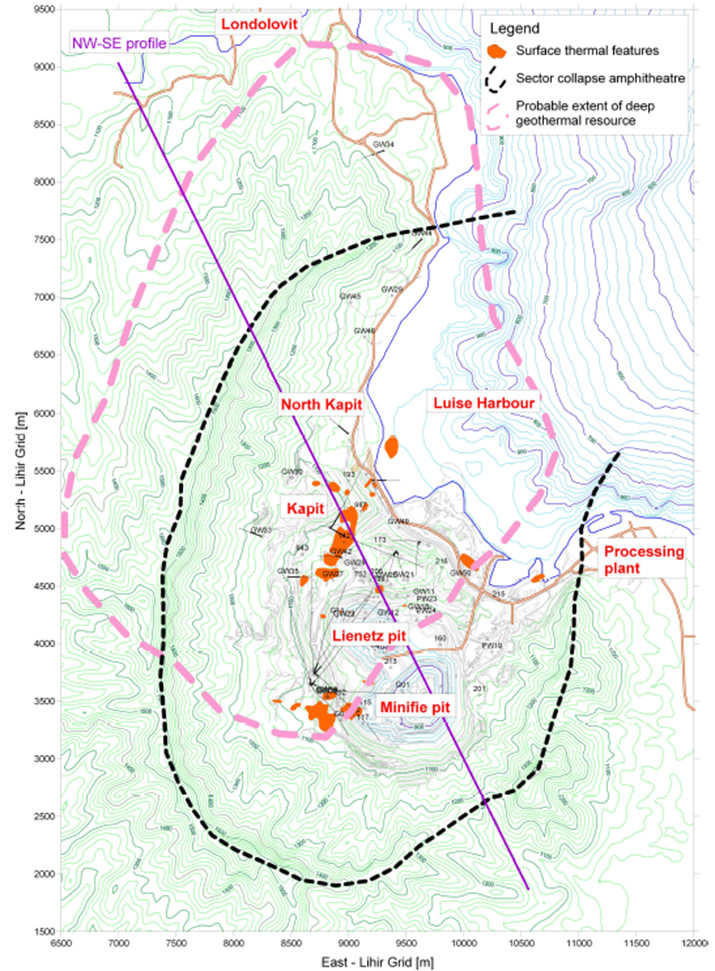
Lihir Mine ore body is contained in a hydrothermally altered porphyry gold system with the gold hosted in volcanics, intrusives and breccias within the structure. The majority of the gold is contained in sulphides.
- Lihir is reported to hold about 17.5 million ounces of gold reserves and over 20 million ounces of gold resources. The mine has proven, and probable reserves estimated at around 310-380 million tonnes ore grading approximately 2.3-2.4 grams per tonne gold.
- The mine was located within a geothermal active zone. The high temperature hydrogeology environment included thermal liquids and steam. Surface ground temperatures were boiling and shallow groundwater fluids were up to ~200°C.
- Eight initial deep (down to ~1400m depth), deviated geothermal wells were drilled to obtain geological data and encountered thermal fluids greater than ~275°C. High mineralisation led to flow assurance challenges.
- Subsequently more than 20# shallower (400-800m deep) geothermal boreholes and wells were drilled to accelerate the cooling and depressurisation of the mine area. Less mineralisation and higher enthalpy fluids made some of these wells suitable for geothermal power use.
- Ground temperatures >100°C can cause fluids to flash to steam when confining pressure is released by mining excavation or blasting, resulting in rock outbursts events to occur. Potential outburst areas where managed using a combination of geothermal depressurisation and pit wall cooling. Ground temperatures up to ~160°C were managed to allow mining operations.
- Dewatering wells were drilled to ~300-400m and 11# downhole submersible pumps were used to pump out a total of ~700 l/s of fluids. Pumping successfully drew-down the water table, but pressure reductions increased the formation of steam in the shallower zones.
- Continual monitoring of temperatures and pressures has been used to ensure safety for mine operations.