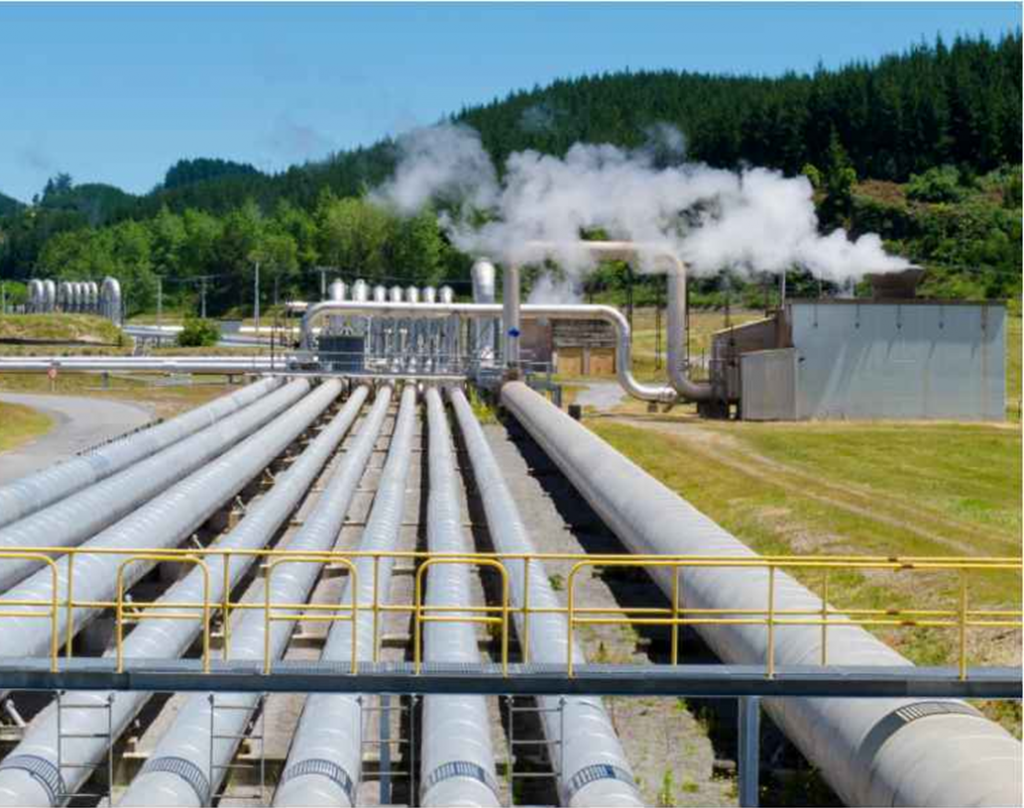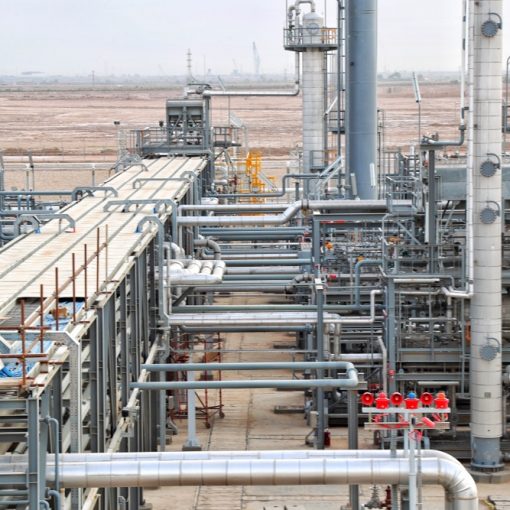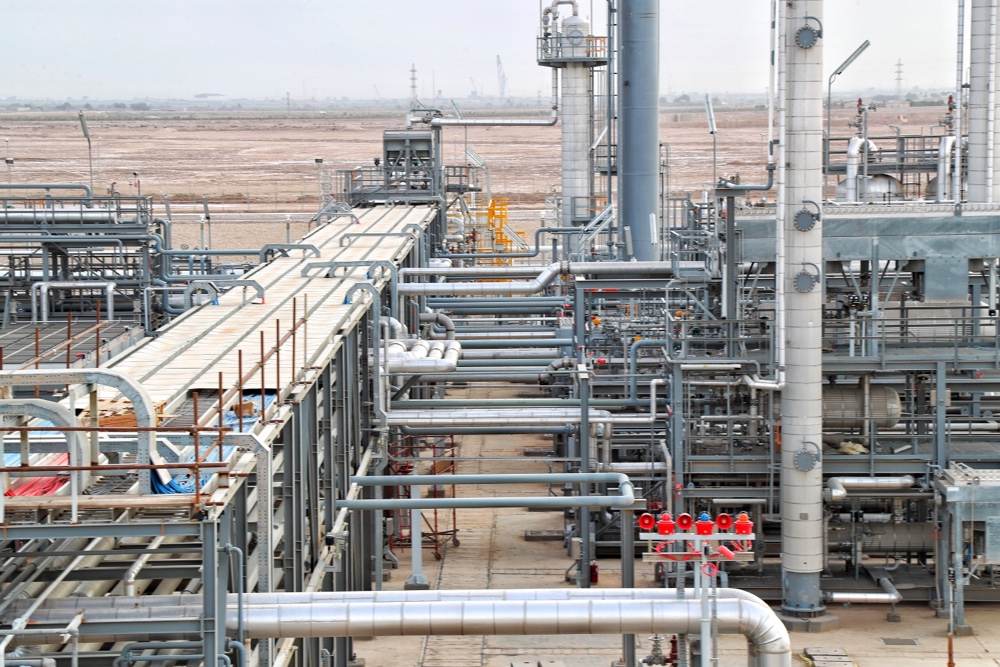
- Hydrothermal fluids flowing from production wells would be routed through insulated flowlines over to a geothermal power plant. Due to large thermal expansions as flowline pipe material temperatures increase from ambient to the temperature of the contained fluids, these lines would need to have expansion loops and bends to allow the lines to expand and contract.
- Produced fluids are typically some mixture of liquid and vapour (steam and NCG). As reservoir fluids reduce in pressure in wells and flowlines, the saturated fluid becomes some mixture based on temperatures and pressures. There can be flow assurance challenges of the produced fluids in these flowlines (i.e., precipitation or scaling) associated with changes in temperatures and pressures.
- The vapour fraction in the produced fluids has high enthalpy which is important, and cooling can adversely affect this. Heat transfer occurs from the fluids to the pipe to the atmosphere by conduction, convection, and radiation. Insulation is typically some layers of calcium silicate, fiberglass, or rock wool enclosed by an outer wrap of aluminium.
- Detailed thermal stress and flow assurance analyses are required to ensure these challenges are mitigated and the flowline systems remain reliable with normal operations and maintenance.