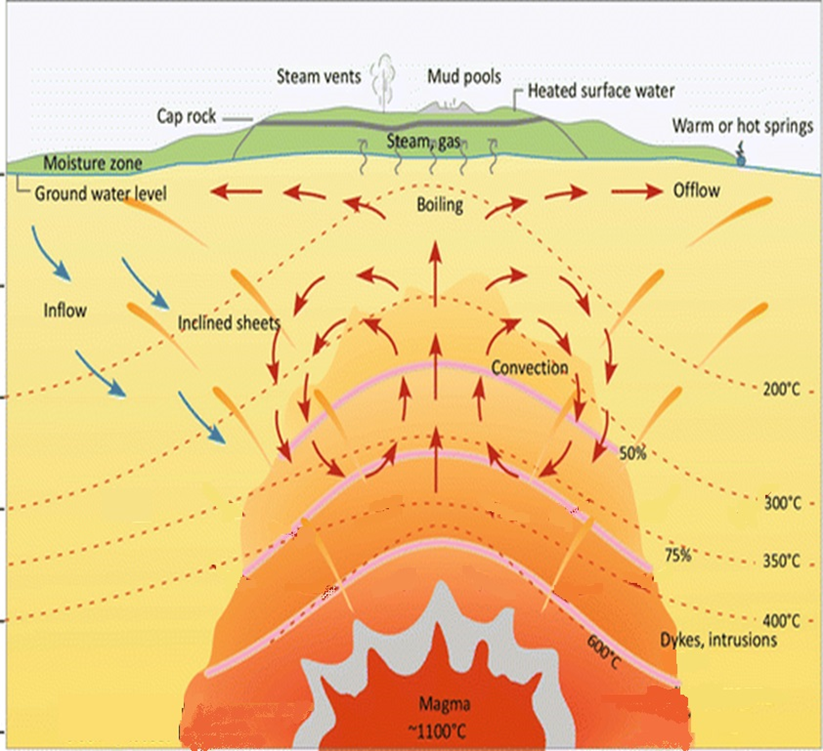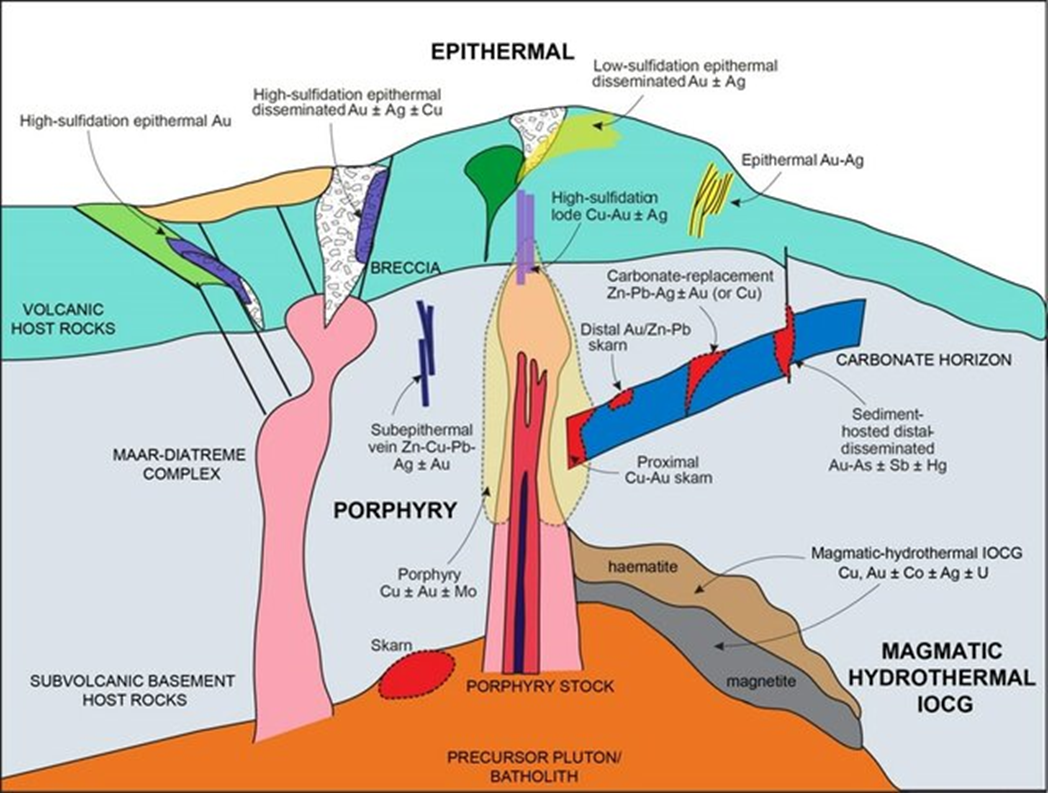
Volcanic Geothermal Systems can involve both shallow and deep heat resources. For deep heat resources, one type is called Petrothermal Reservoirs. At greater depths, closer to the magmatic conduits and chambers, there can be much great temperatures, but also might be too deep for circulation of meteoric water. There may be magmatic “juvenile” water fluids from dehydration of subduction crust, but at these depths there might not be enough effective permeability to hold these fluids. So these reservoirs may also be called “hot, dry rock”. In some volcanic geothermal plays, the depth of these reservoirs can be less than 2000m (so less than 3000m deep EGS systems).
- These reservoirs can be naturally formed by fault and fracture systems, but recent successful experience in FORGE-Utah and Fervo-Nevada has shown that hydraulic stimulation can be utilised to establish more reliable fluid circulation pathways between adjacent wells.
- After stimulation, surface fluids can be introduced to be circulated to be conductively heated. With the much higher rock temperatures up to 300degC, much more energy could be produced from a pair of producer-injector wells.
- Technology exists to drill these wells, but drill bits, downhole power tools, measurement while drilling (MWD) systems, and drilling fluids would be greatly challenged. Technology is being advanced, but still in progress to be fully proven across a range of technologies.
- Geothermal Developments using Shallow Hydrothermal Reservoirs first would allow infrastructure and grid connections to be developed in the short to medium term for the eventual use to access these Deep Petrothermal Reservoirs in the longer term.