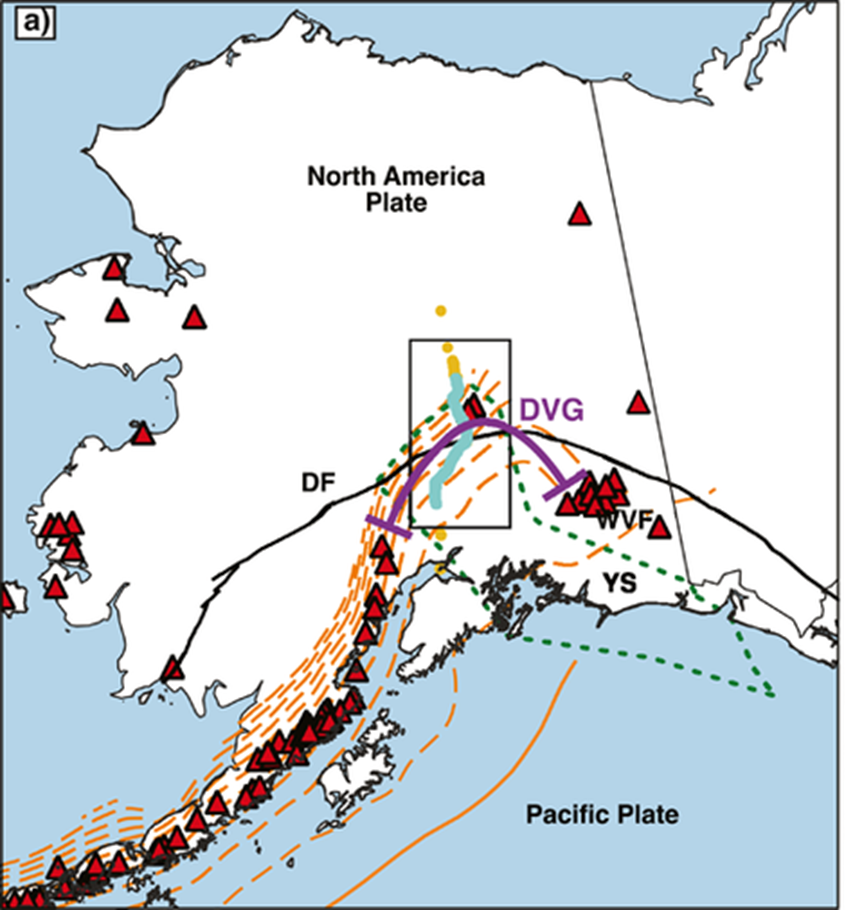
- Alaska’s Aleutian Islands and Alaska Peninsula are a zone of convergent plate boundaries where the Pacific Plate is subducting beneath the North American Plate.
- Alaska contains over 130# volcanoes and volcanic fields active within the last two million years, with ~90# Holocene (last ~10,000 years) and over 50# being active in the last 300 years.
- The Aleutian Arc has numerous stratovolcanoes. There are more than 80# named volcanoes with over 44# active since 1741.
- Alaska’s Department of Natural Resources, Division of Geological & Geophysical Surveys subdivides the Aleutian Arc volcanoes on the basis of their geochemistry, specifically whether they are tholeiitic or calcalkaline.
- The two magma series arise from fundamentally different processes governing magma production and evolution, and individual volcanoes generally lie on a continuum between tholeiitic and calcalkaline end members. Tholeiitic volcanoes are typically large in volume, and Calcalkaline volcanoes are typically small in volume.
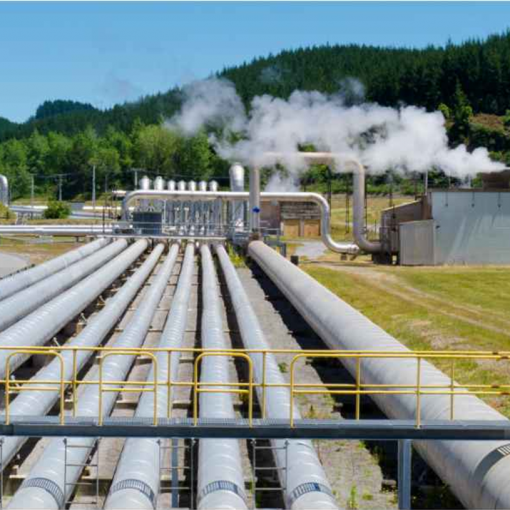
- There are numerous surface manifestations including hot springs, fumaroles, and vents, but geologic data including heat flux, presence and composition of hydrothermal fluids and gases, and permeability of potential reservoirs is somewhat limited.
- Some work has been done to identify play fairways and geothermal favorabilities and models.