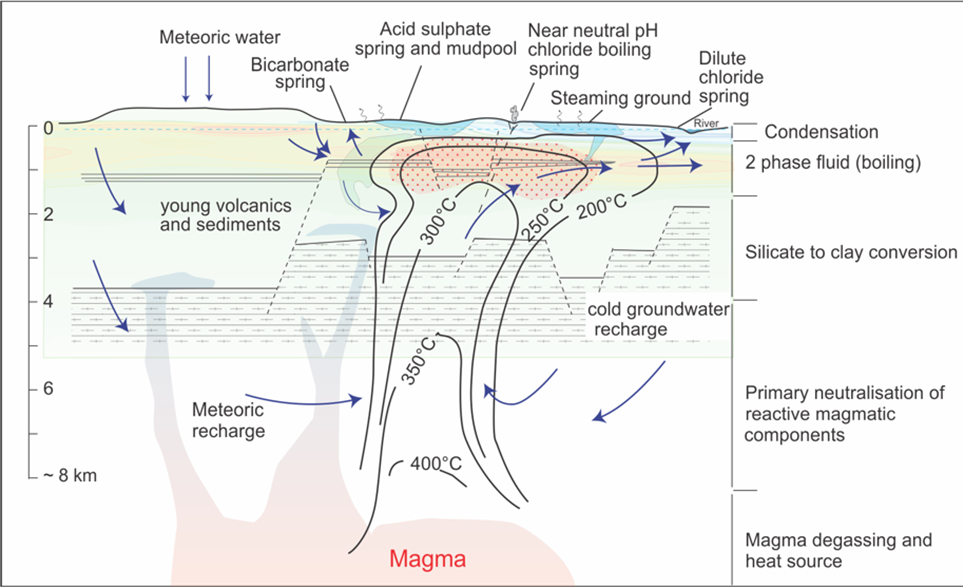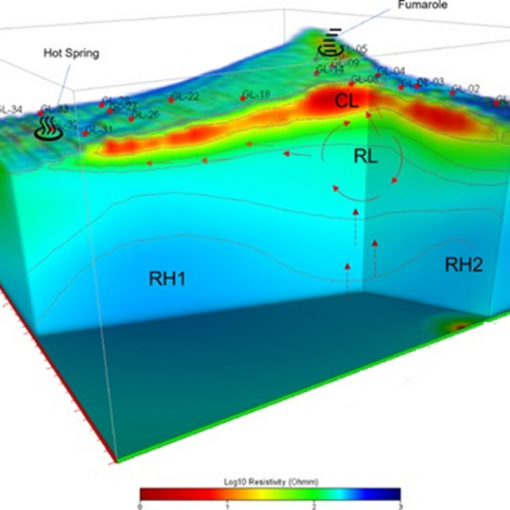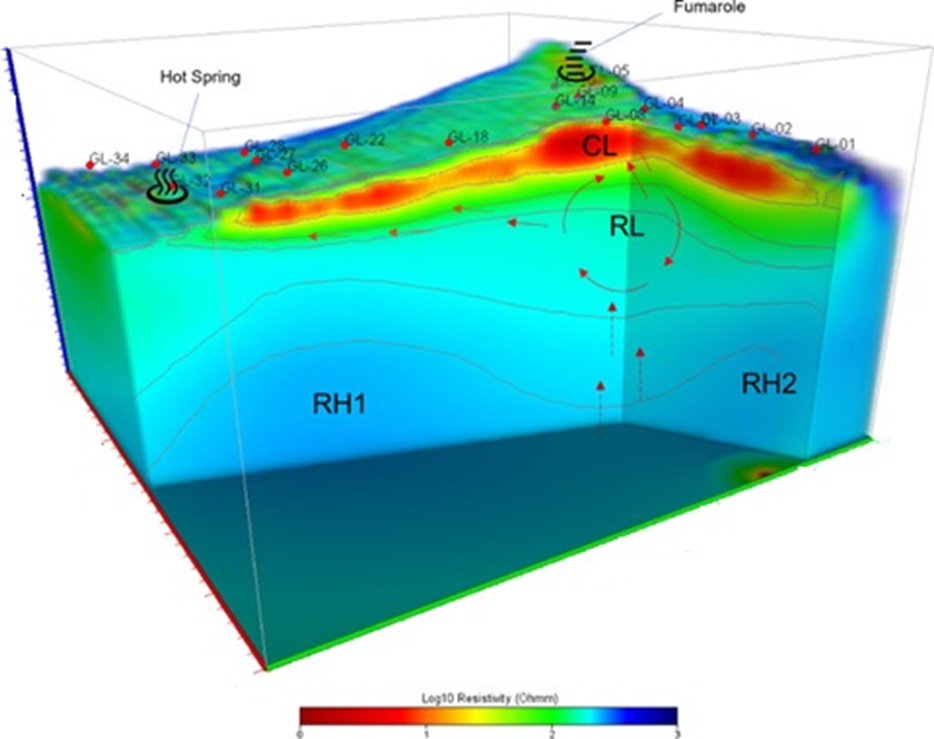
- Geothermal hot springs are important conduits for the discharge of fluids to the surface. Hot springs associated with fault zones would have circulation from potential high heat locations. Due to high temperature and strong water-rock interaction in these deep-cycle processes, they can dissolve different kinds of minerals, resulting in different geochemical characteristics. Determining pH (Acid/Alkali) and Temperature is important.
- Fluids would be analysed for chemical and isotopic composition. Chemical Geothermometers utilise the chemical composition of silica and major cation (alkali) contents. Steam discharges could be analysed for gas concentrations or relative abundances of gaseous components. Isotopic Geothermometer utilise the isotopic exchange reactions between various phases (water, gas, mineral). Any cooling or dilution of fluids as they rise from hydrothermal reservoirs (i.e., meteoric water, surface water, connate water, or seawater ingress could adversely influence the chemical composition and would have to be considered.
- Different Silica Geothermometers have been developed by various scientists and their applicability to various temperature, potential precipitation ranges, changes in pH, and mixing would have to be considered.
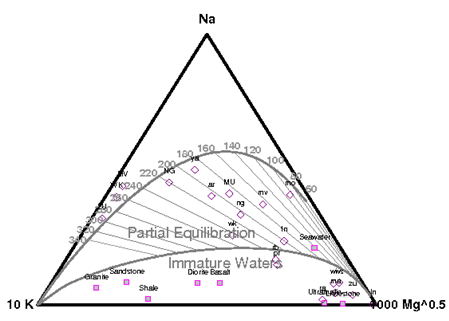
- Cation Geothermometers (Alkali Geothermometers) are empirically developed (i.e., Na/K, Na-K-Ca, Na-K-Ca-Mg, Na-Li, K-Mg, etc) and once again need to have their applicability evaluated.
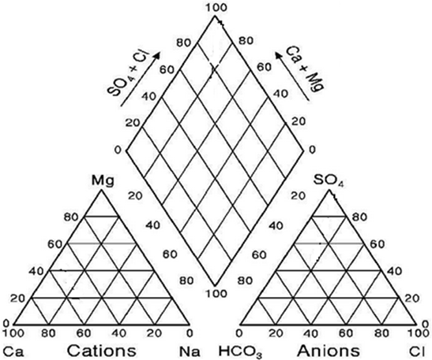
- Geochemical data helps further characterise these Geothermal Systems.