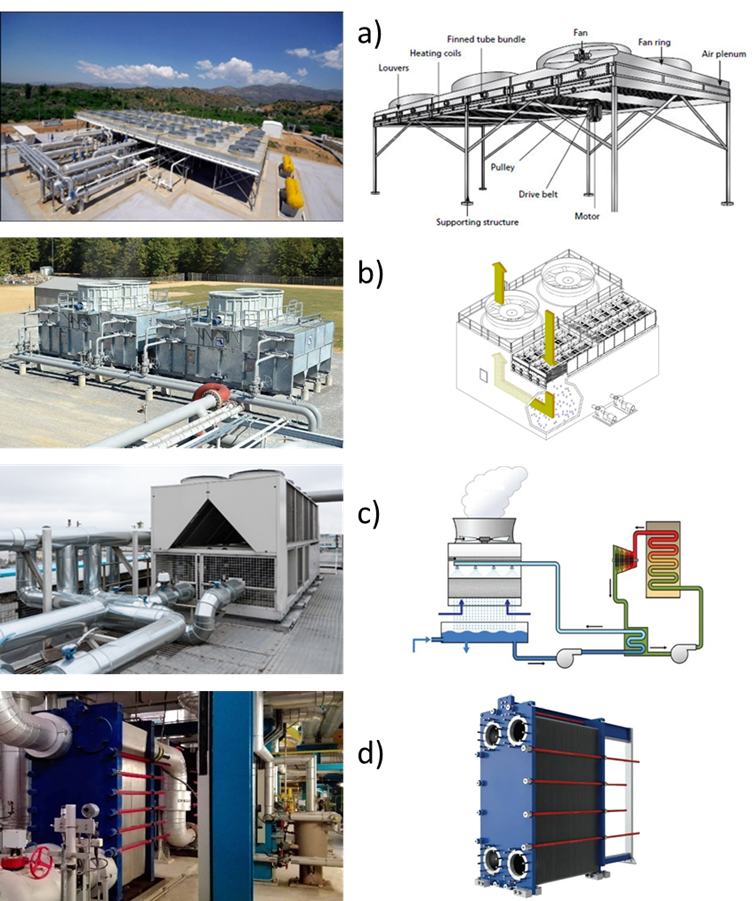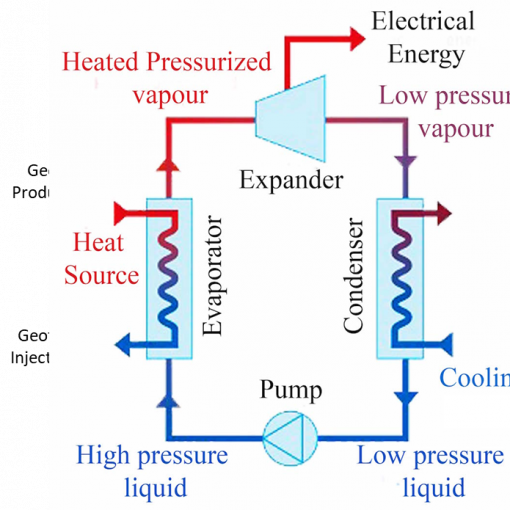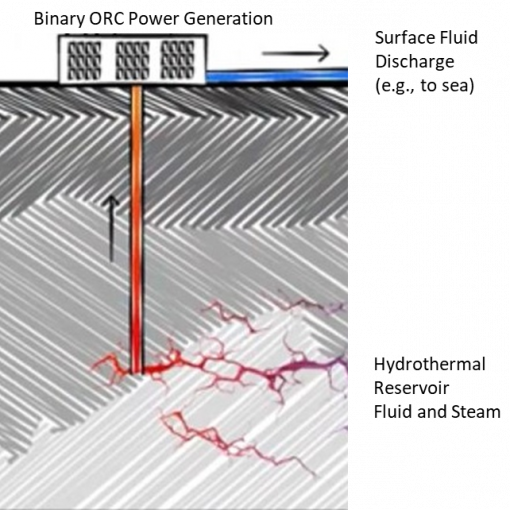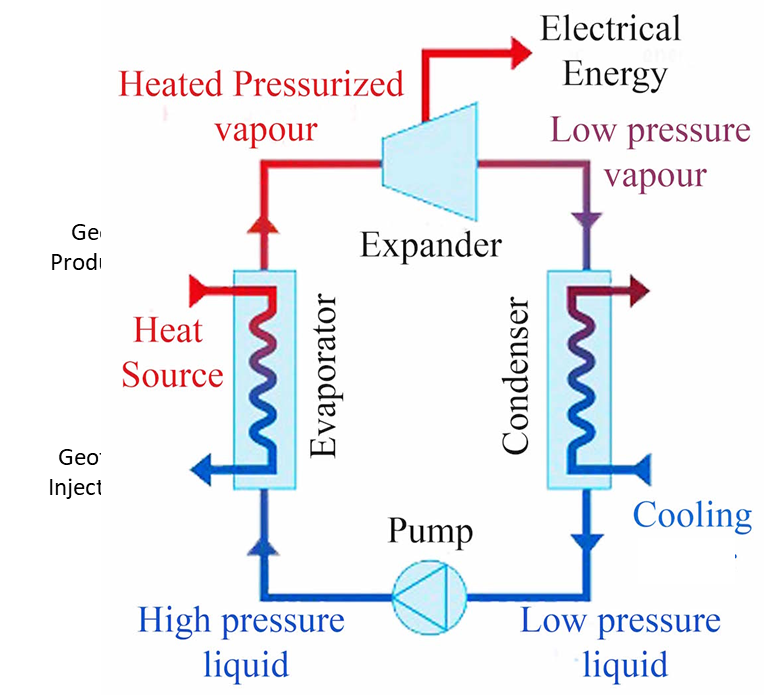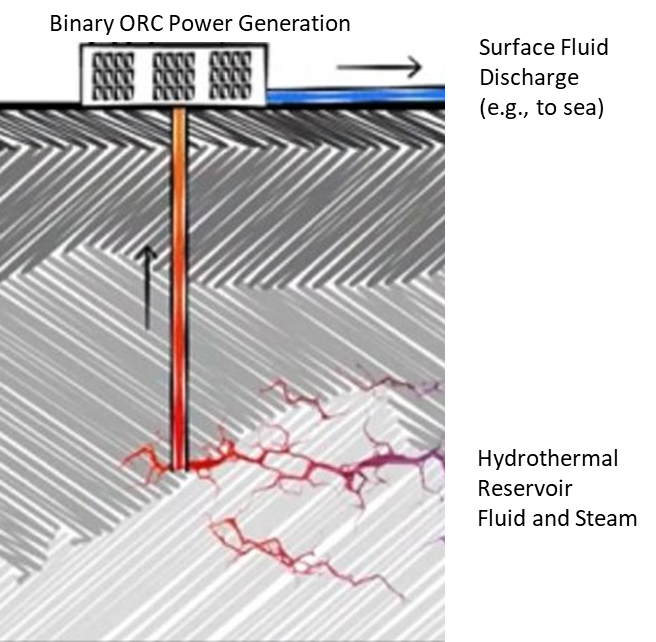
Cooling of closed system working fluids is essential for the efficiency of Binary Organic Rankine Cycle (ORC) power generation. Several type of cooling technologies exist:
- a) Air cooled – less efficient system in tropical climates, but one of the most commonly used systems on volcanic island geothermal projects. May be required if individual well pad power generation option is selected.
- b) Wet surface air cooled – more efficient system, utilises wet bulb temperatures. May be able to be used, but requires water usage that may not easily be available.
- c) Water cooled – much more efficient system, relies on ambient water temperature. May be able to be used, but requires substantial water usage that may not easily be available.
- d) Water heat exchangers – an example would be seawater cooling where seawater would be pumped through a corrosion resistant alloy heat exchanger that would in turn cooldown closed system cooling fluids. This is the most efficient cooling system but might only be used for nearshore facilities.
- The most obvious difference is whether cooling water was available and economic to be used. Not all locations are suitable (i.e., small volcanic islands or arid regions typically use air cooling). The type of cooling technology selected will also determine how much “parasitic” power is required to power the cooling system and this power would reduce the amount of electricity available for export.
- All types of cooling have been used at various Geothermal power plants, but some are more common with distributed power generation at well pads whereas other types are more common at large central power plants. Well proven technologies available from multiple suppliers.