- Volcanic Geothermal Systems developing shallow hydrothermal reservoirs can have production well flows with normal pressures and elevated temperatures and two phase flow (liquid and vapour (steam and non-condensable gases)) but during drilling there can be some risks.
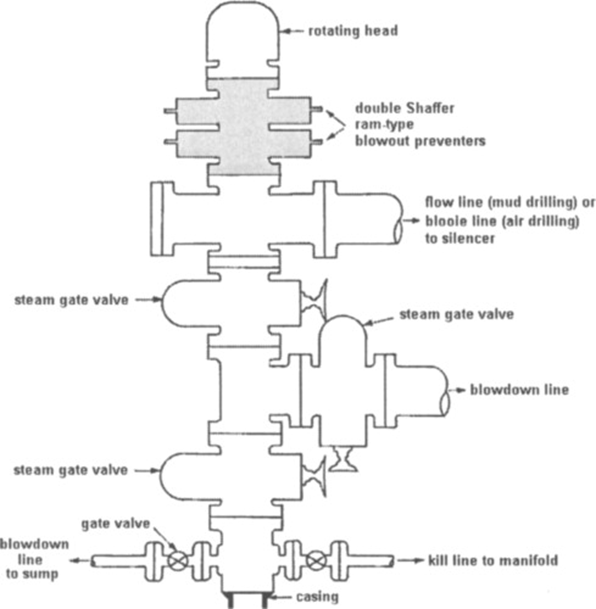
- Wellhead equipment and accessories for drilling and completion would include master valve (after completion of the well), flanges, valves, and gaskets in various combinations and stacks as shown.
- When drilling a geothermal well, there is the possibility to penetrate a high pressure good permeability zone that could flow very vigorously and this has happened enough times to result in regulations requiring BOP’s in some countries.
- Blowout preventer (BOP) could be: (1) annular BOP which is a large valve with elastomeric sealing that is designed to seal the annular space around the drill pipe, usually placed on top of the BOP stack, and (2) Fast acting Ram-type valves attached to surface casing stack (two systems: Blind Shear Ram when drill pipe in the hole, and Blind Ram when no drill pipe). Both types can be used simultaneously for various reasons.
- Complete shutoff capability with a BOP stack requires sufficient well casing cement deep enough through competent rock. Where the competency of near surface formation lithologies is a risk factor, the ability to divert well flow is an important capability. A diversion valve below the BOP would allow subsequent controlled venting of the well fluids (blowdown) to the silencer system until the well could be brought under control (often with quenching the well with cold water).
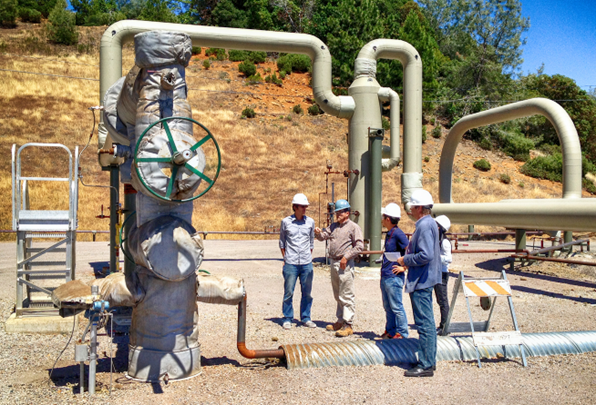
- After the well is drilled and made safe, the drilling systems would be removed and a surface tree, which is a collection of valves, fittings , and control devices, installed above the wellhead to manage the well fluid flows during production or injection.
- Regular testing and inspection of these wellhead and tree systems is critical and should be included in a maintenance management system.