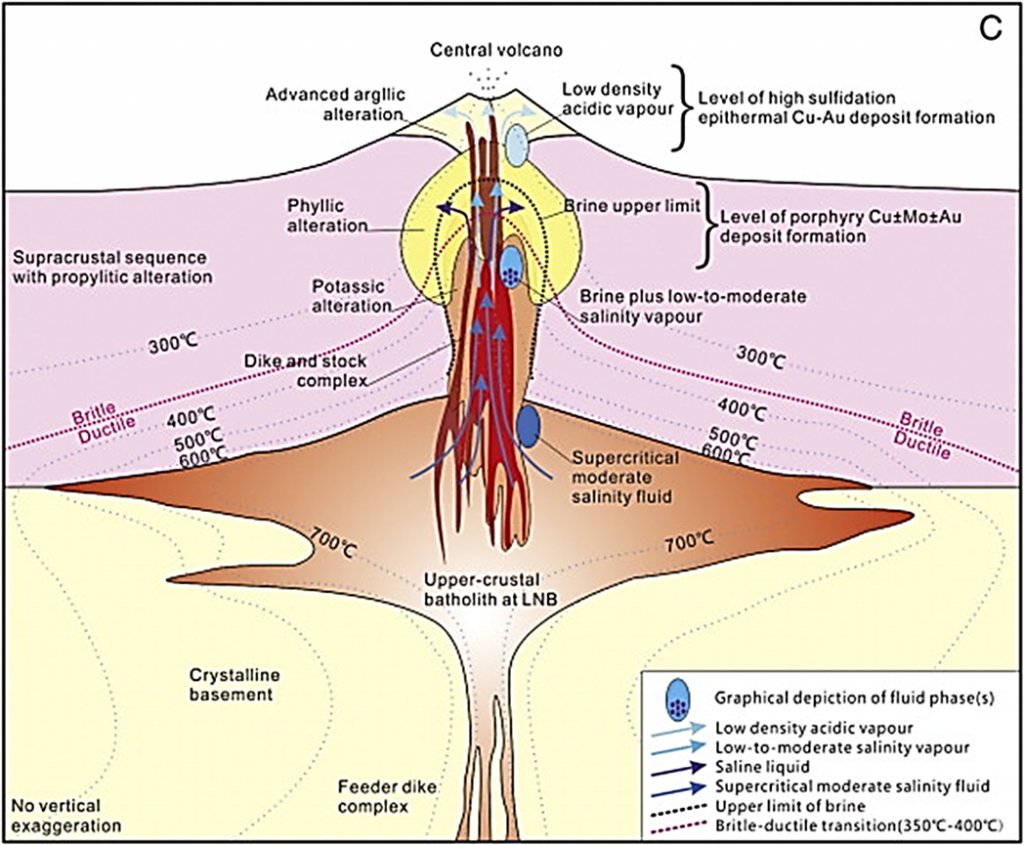
- Porphyry deposits: Gustafson and Hunt (1975) gave a good description of how a porphyry copper deposit was formed in Chile that can be used as a generalised scenario: “(1) shallow emplacement of a usually complex series of porphyritic dikes in and above the cupola zone of a calc-alkaline batholith; (2) separation of magmatic fluids and simultaneous metasomatic introduction of copper, other metals, sulfur, and alkalies into both the porphyries and wall rocks; and (3) the establishment and inward collapse of a convective ground-water system, which reacts with the cooling mineralized rocks. … The differences and unique features exhibited by individual deposits reflect the imprint of local variables upon the basic model. The local variables include depth of emplacement, availability of ground water, volume and timing of successive magma advances, and the concentration of metals, sulfur, and other volatiles in the magmas, as well as depth of exposure.”
- The geological age of this depositional system and whether or not any surface manifestations of the subsurface thermal heat (including upflows) remain would obviously influence whether or not geothermal energy could be co-developed to support any mining operations.