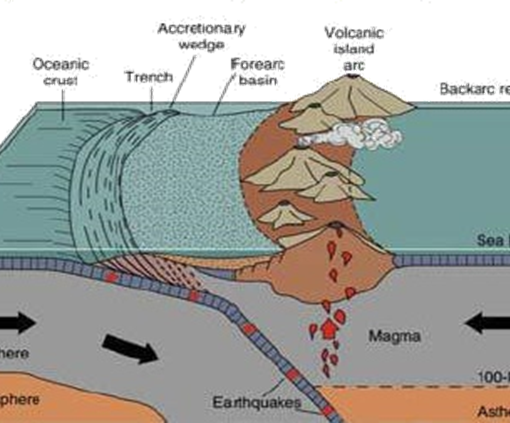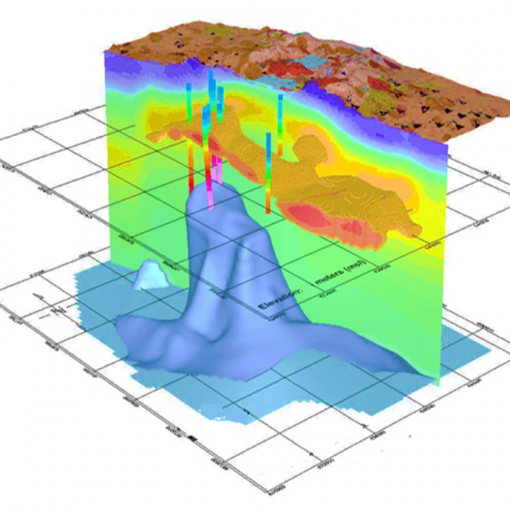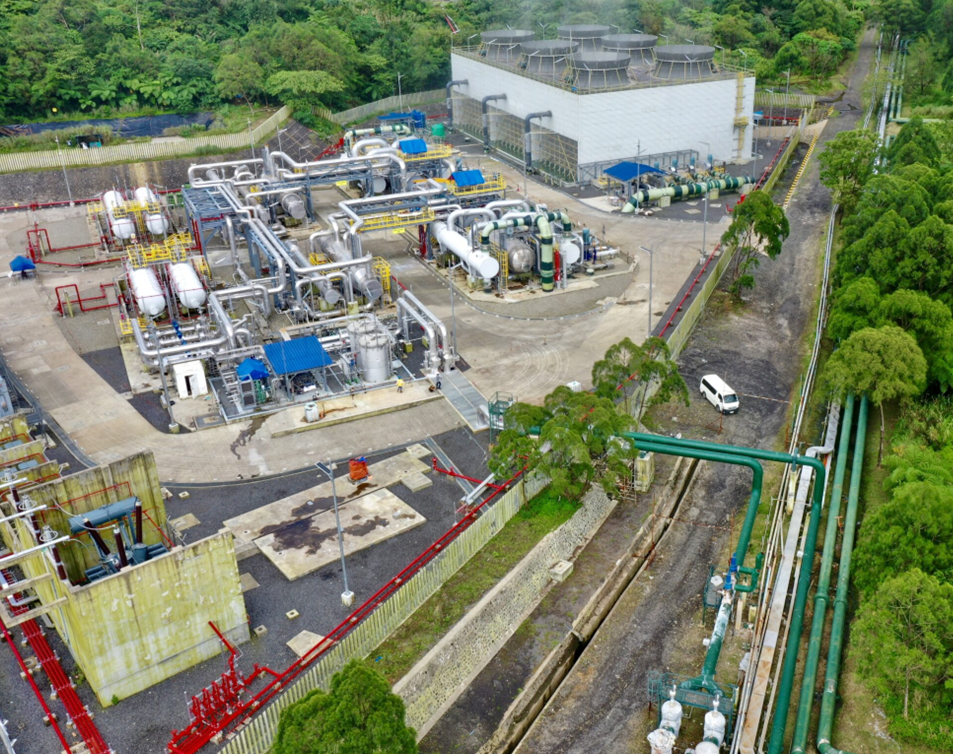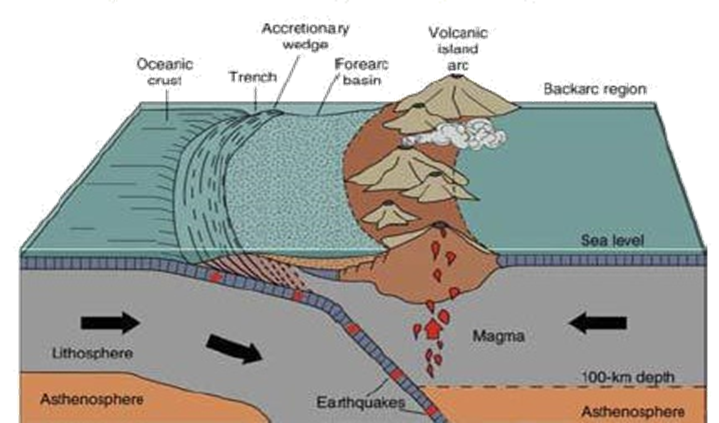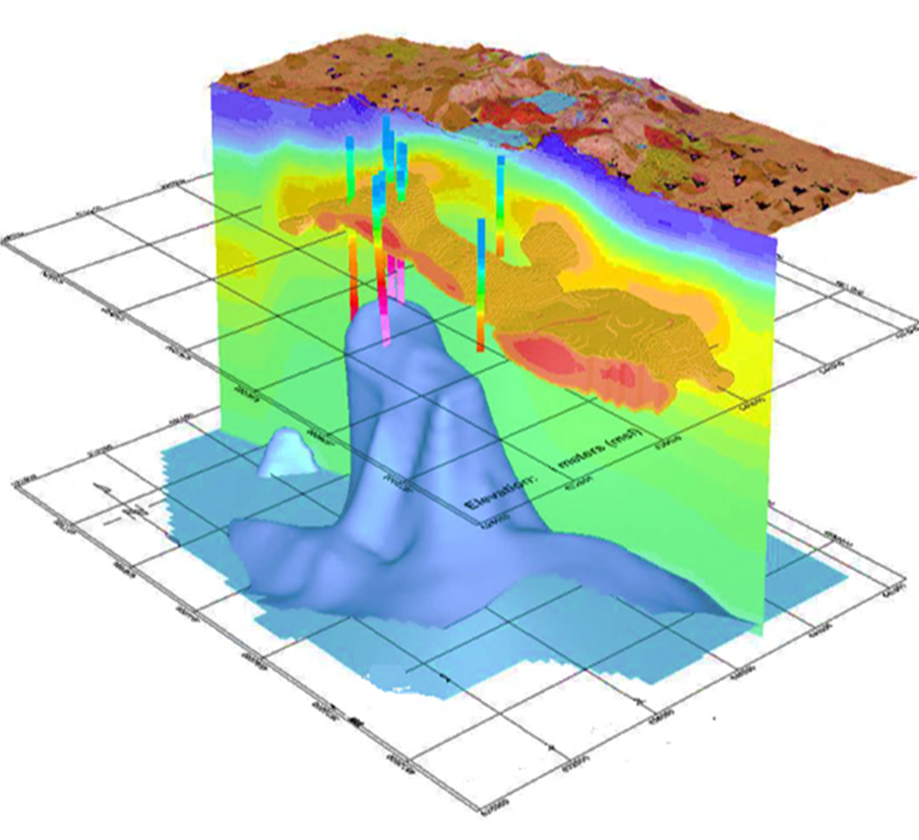
- Volcanic Systems may be visually evident with structural and thermal surface manifestations. They are also possible to be partially eroded (from original paleosurfaces) and may be obscured by volcanic tephra, ash and sedimentation.
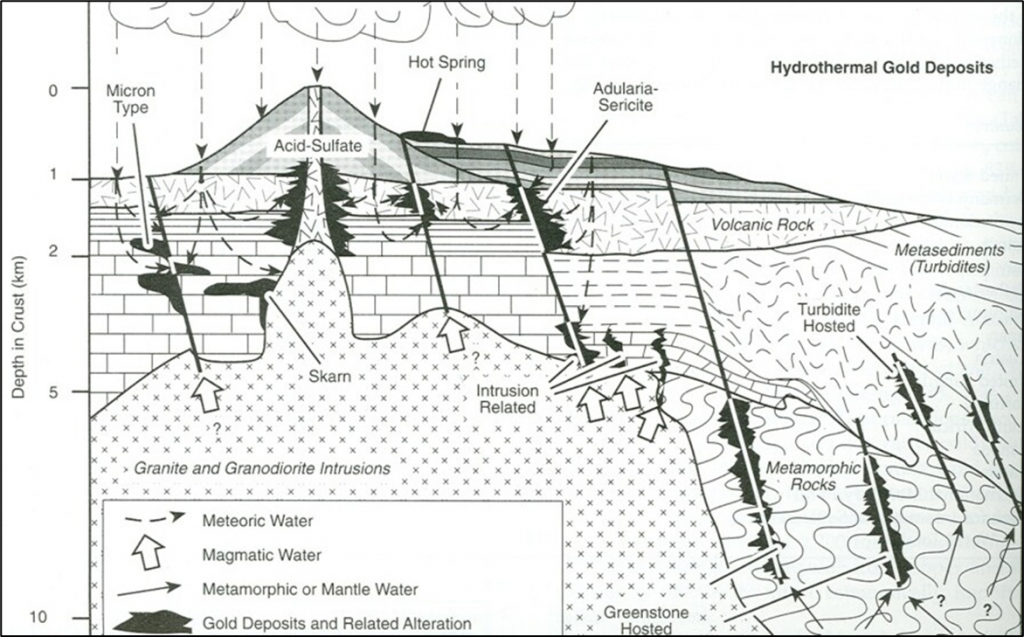
- The nature of the thermal upflows beneath these volcanic systems can be associated with the transport upwards of both minerals and magmatic fluids that mix with meteoric water closer to the surface.
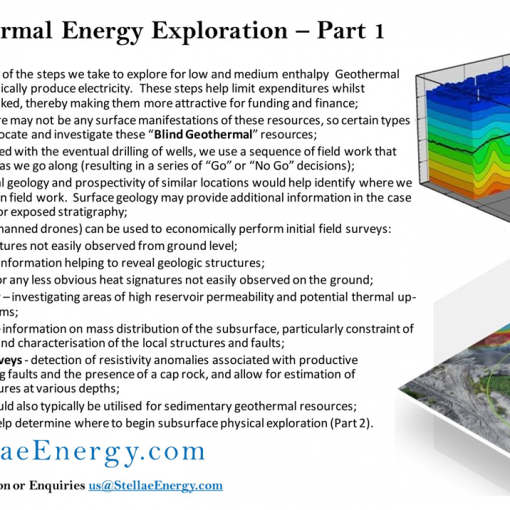
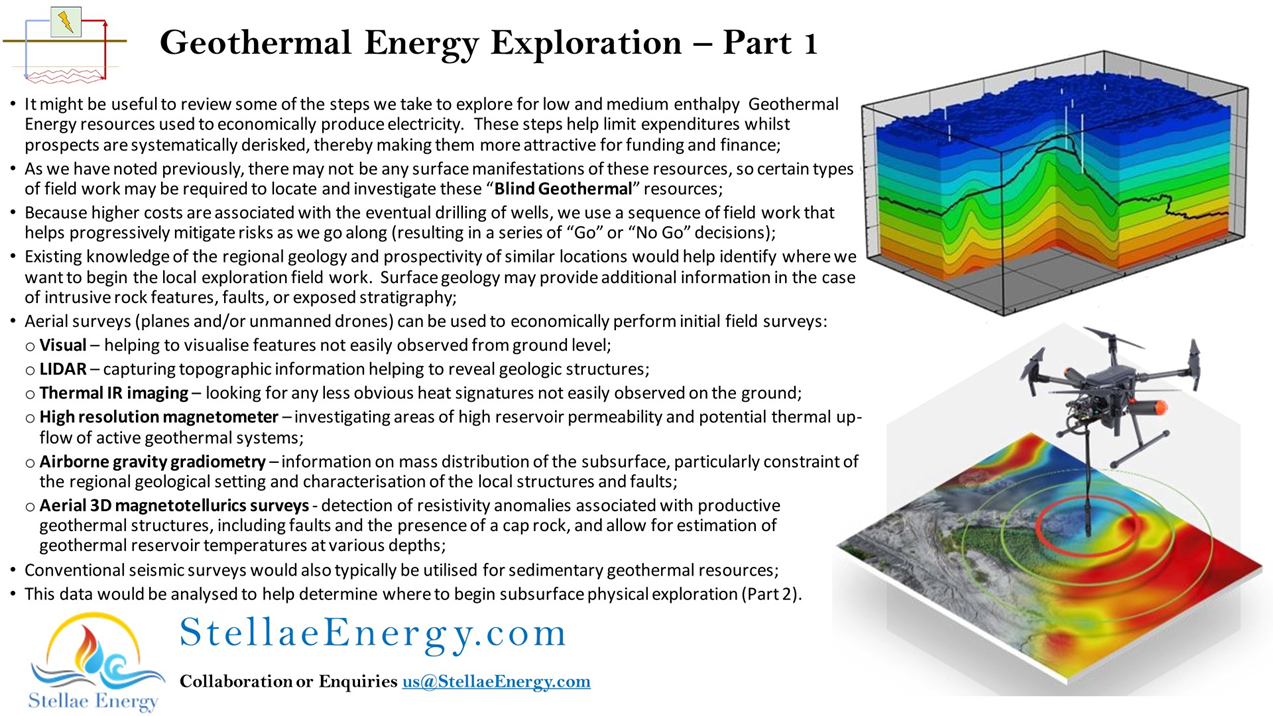
- Exploration would begin with regional and local geological studies and investigations, then surface geological fieldwork, then geophysical surveys, and then borehole fluid and rock sampling and testing.
- There are numerous locations where both geothermal energy resources and mineral resources have been found in close proximity, offering significant co-development technical and commercial benefits.
- Fortunately there is significant overlap in exploration.
- Minerals exploration could involve obtaining stream sediment and panned concentrate samples, soil samples, rock samples, ridge-line samples, and eventual shallow boreholes with core samples and assays. Different depositional systems will result in different manifestations.
- Geothermal exploration is similar from the perspective of performing sampling of surface and subsurface fluids and borehole cores. Fluids are analysed to obtain estimated temperature of fluids at depth calculated using classic solute geothermometers (e.g. Na/K, SiO2). Where possible gas samples would be collected and tested to better characterise the involvement of magmatic heat sources.