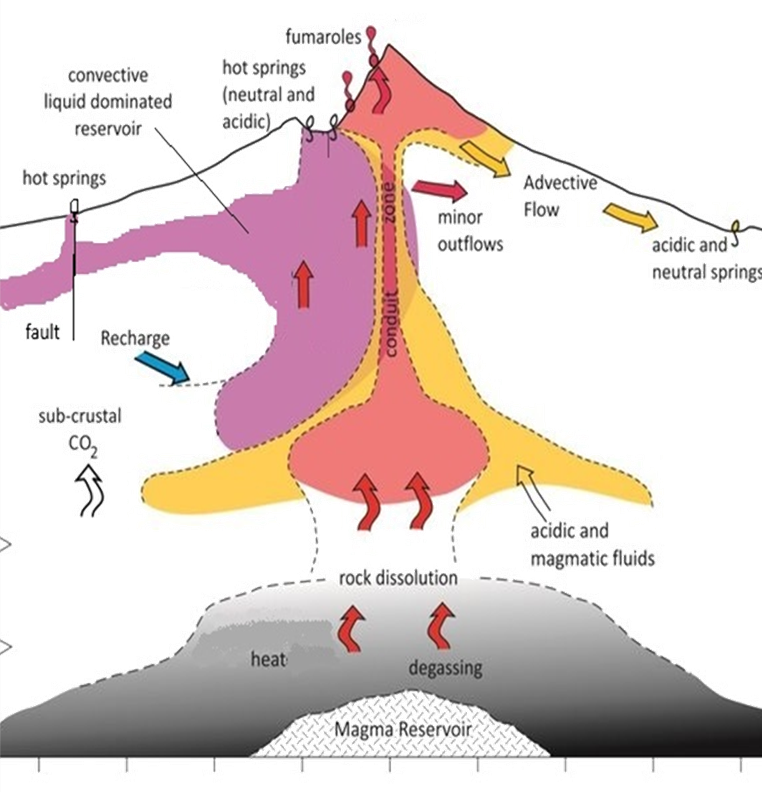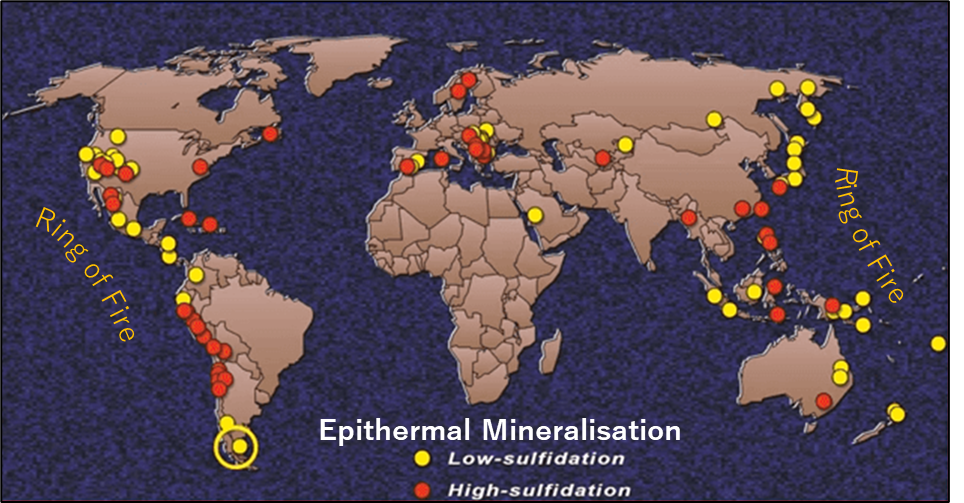
- Volcanic systems could have both upflows and outflows of heated fluids.
- Heat upflows into hydrothermal reservoirs (and potentially to the surface) are believed to have come upwards through permeable, highly conductive faults and fracture systems, generally enclosed by extensive secondary mineralisation, associated with intrusive features below the island. The faults and fracture systems of these intrusive features may not been geophysically imaged, but eventual wells data would likely provide more understanding of potential heat upflow systems.
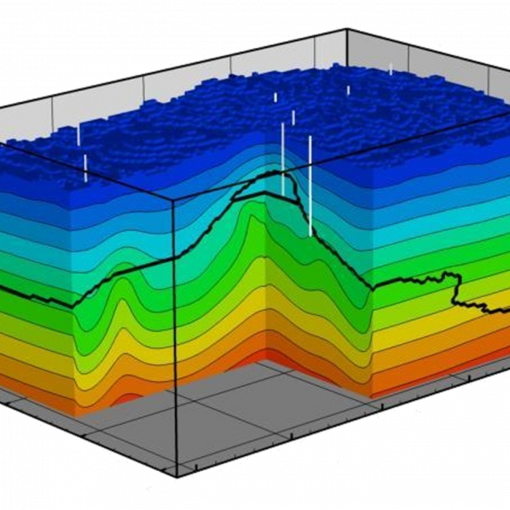
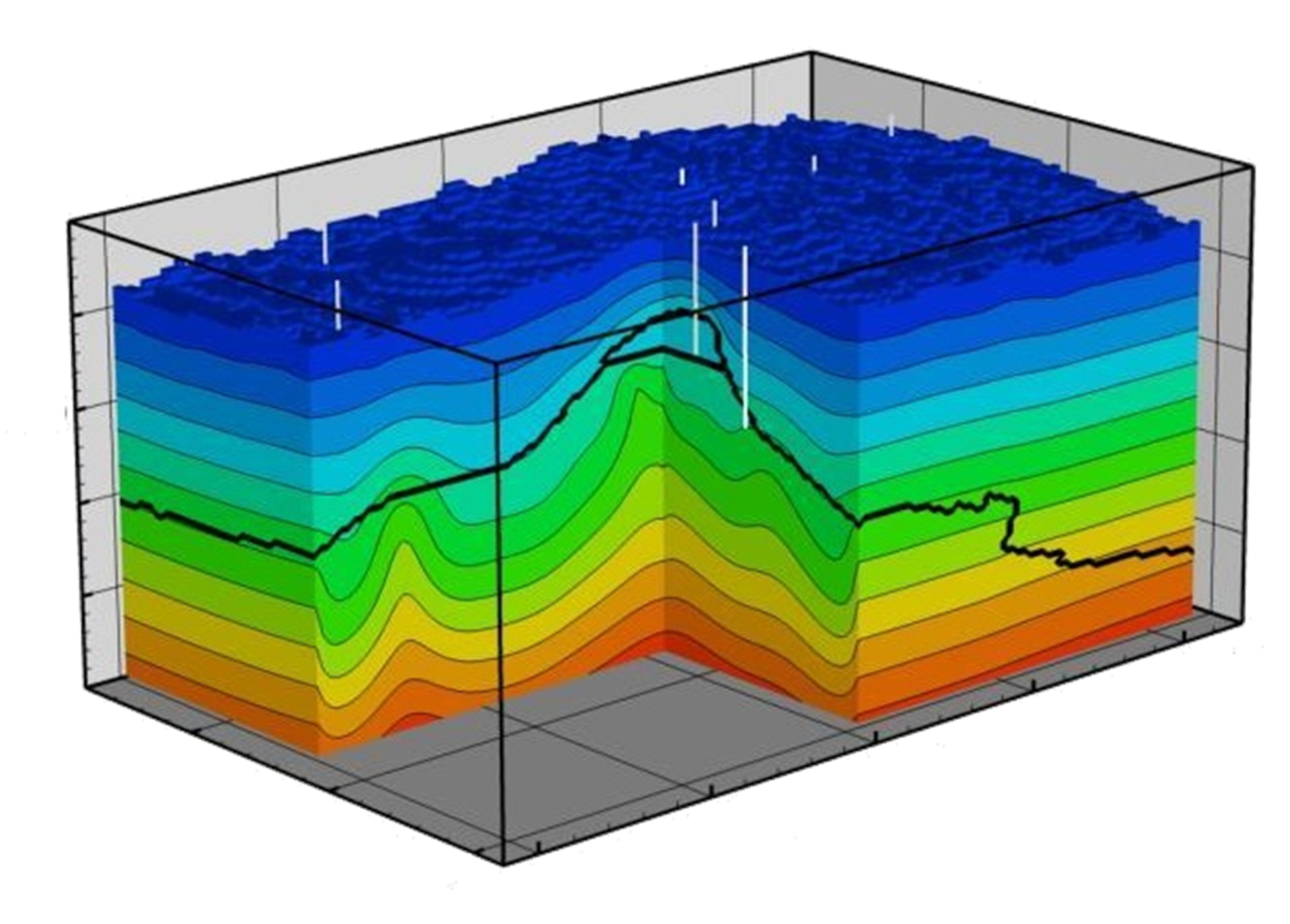
- The layers of the stratigraphic column contribute to horizontal permeability. Secondary features of fault and fracture systems contribute to vertical permeability. Both kinds of features support thermal convective circulation of hydrothermal reservoir fluids. Exploration investigations would provide data about both types of permeability.
- Hydrothermal reservoir fluids in surface thermal springs would be sampled and geochemically tested to help gather information about the fluid sources and reservoir temperatures. Fluids sources can be meteoric water (rain), deep connate water, or seawater intrusions (if reservoir located closer to island shores). The types and concentrations of minerals dissolved in these fluids helps identify the source and potential hydrothermal reservoir temperatures.
- Outflows are the surface manifestations from these upflows and shallow reservoirs and can help provide information about subsurface conditions (i.e. hot water liquid dominated reservoirs or vapour dominated reservoirs) and further information about reservoir temperatures and pressures.