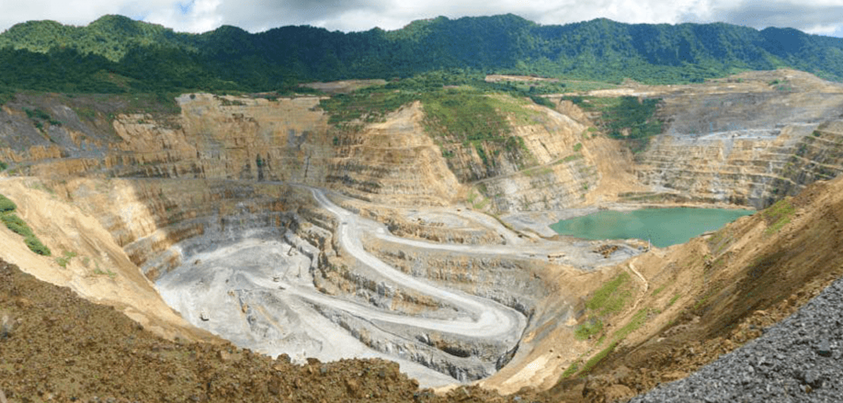
- A well known example of co-located mineralisation deposits and shallow geothermal fluids is the Lihir Mine on Lihir Island in Papua New Guinea. Discovered in 1982 followed by diamond drilling in 1983-1984 and RC drilling in 1986-1987. Mine production began in late 1997. By end 2023 a total of ~11,343 drill holes had been drilled.
- Lihir is made up of five Miocene-Pleistocene volcanic units, three with surviving volcanic structures including the Luise “caldera” (that may be a partial volcanic slope failure ~400,000 years ago). This Luise structure is open to the north-east where it forms Luise Harbour.
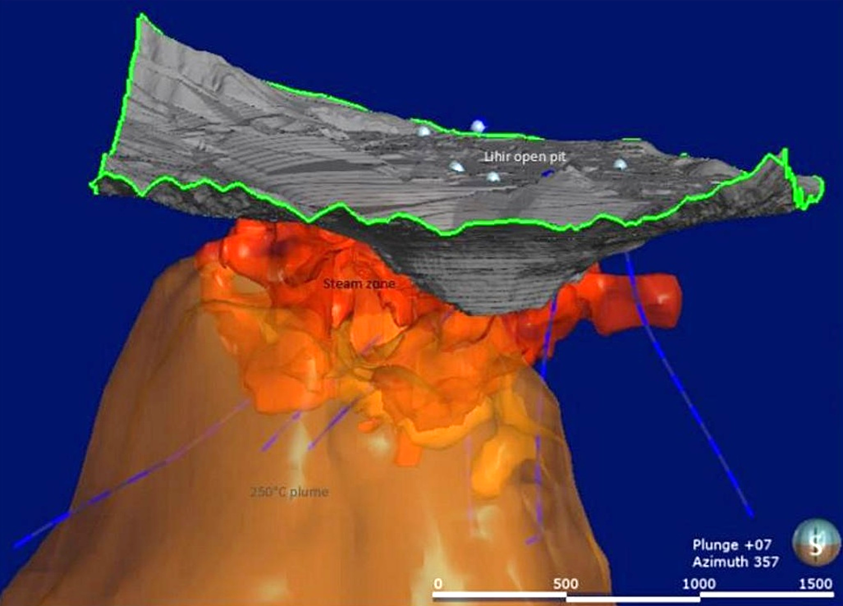
- Exploration work defined a number of adjacent and partly overlapping mineral deposits inside this Luise structure. Geothermal surface manifestations (thermal springs and fumaroles) were found in this area overlapping the mineral deposits.
- An open pit mine required to extract these mineral resources was calculated to extend to depths of up to ~200-250m below sea level. Hydrothermal fluids (including upflows), a high water table, and seawater inflows were significant challenges. As a result, dewatering to remove shallow fluids was needed to be to a similar depth. Dewatering objectives:
- Depressurise and cool the underlying shallow geothermal reservoir.
- Mitigate seawater inflows from Luise Harbour.
- Improve stability of pit berms by reducing pore pressures behind the pit walls.
- Depressurisation of the “steam cap” (due to removal of overburden pressures on shallow reservoir) in the pit area.
- Mitigate the geothermal hazard for mine operations.
- With successful dewatering, then mine has been able to mine ~9 million ounces of gold since the start of production with almost ~700,000 oz of annual production currently. Mining was planned to begin tapering off and shifting to processing of stockpiled lower grade ore, but expansion phases have resulted in continued mining of high-grade rock whilst also processing lower-grade stockpiled material.