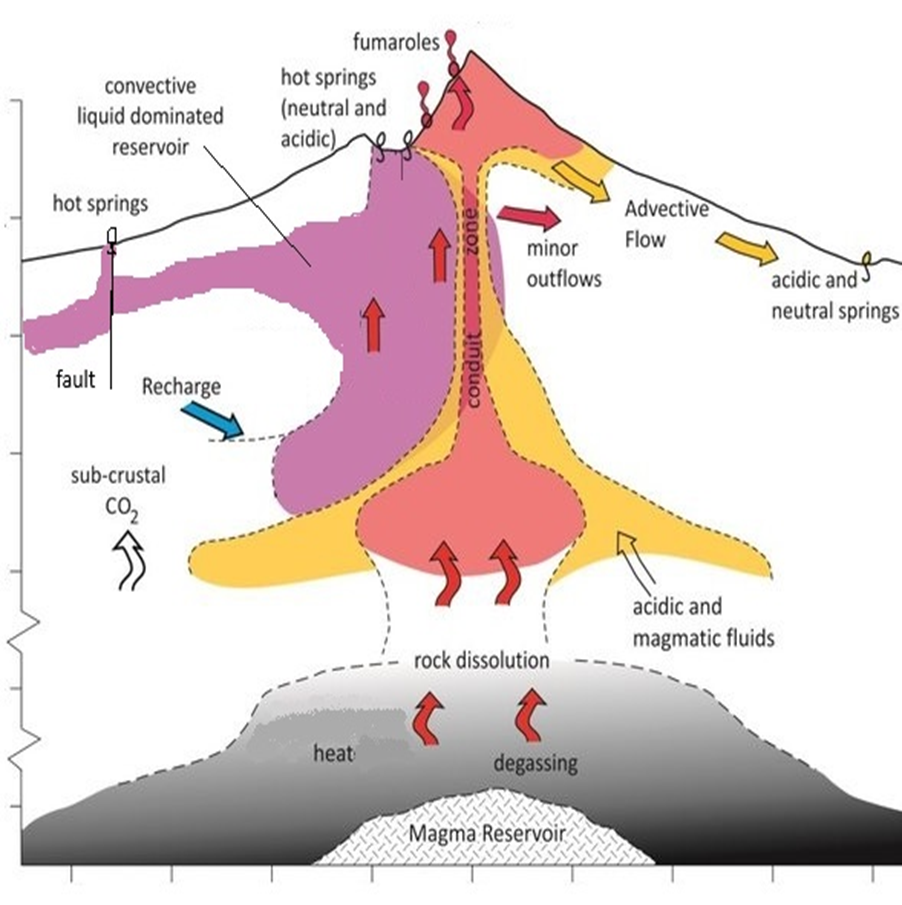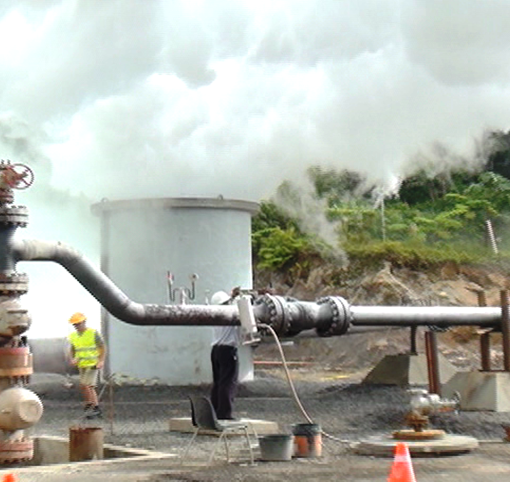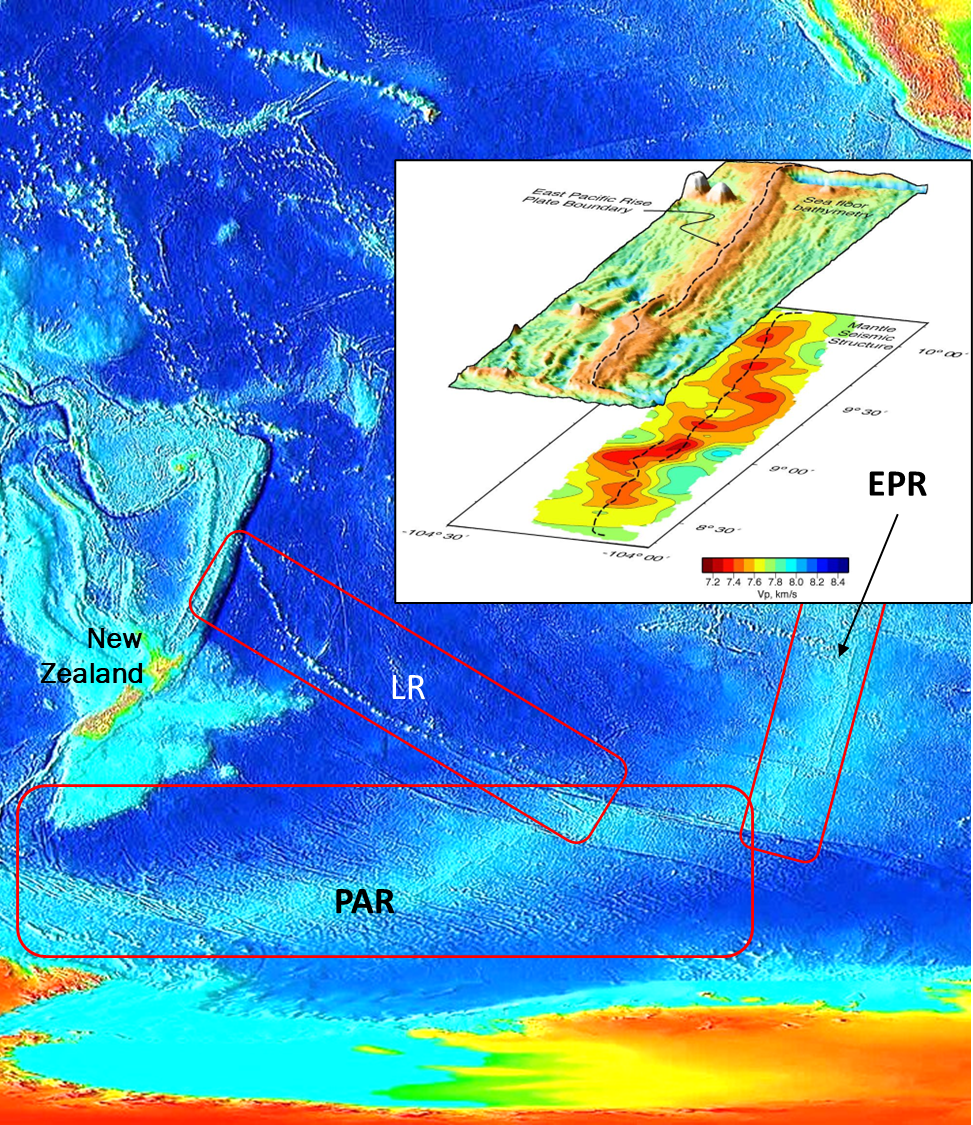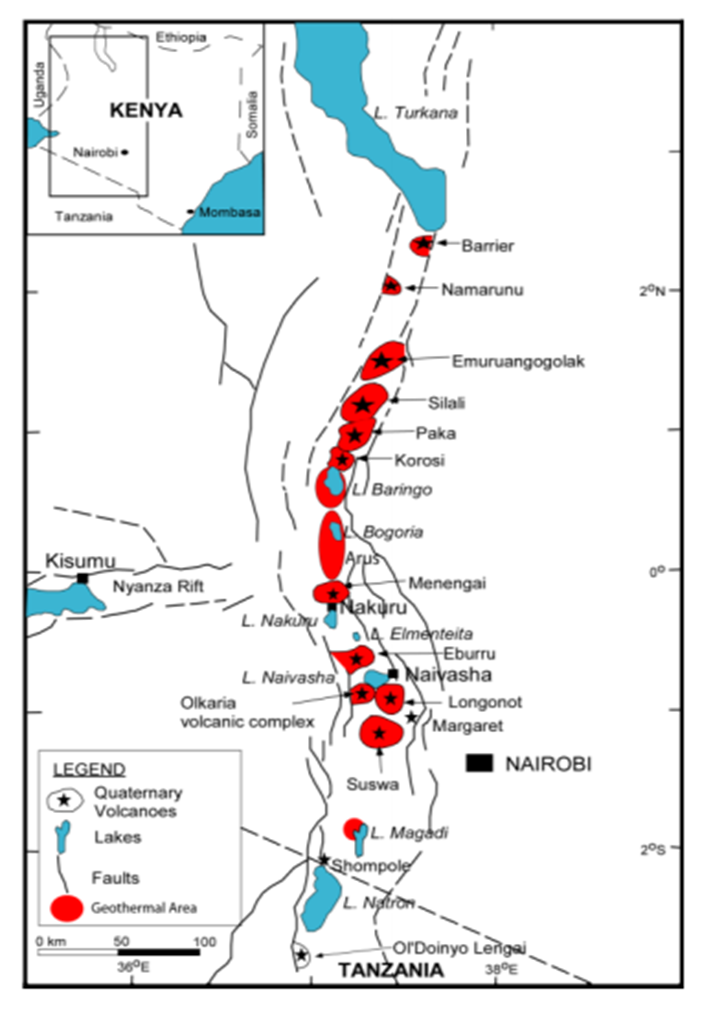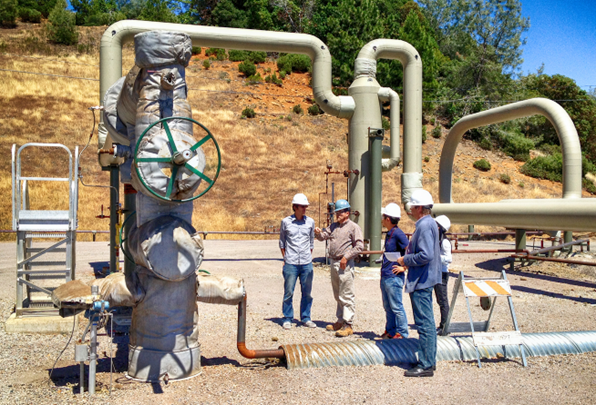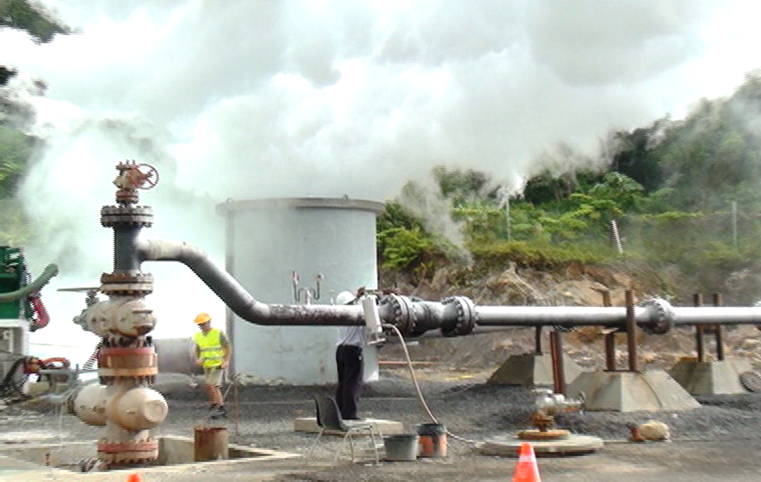
- Volcanic Geothermal Systems can involve both shallow and deep heat resources. For shallow heat resources, one type is called Hydrothermal Reservoirs. These reservoirs can have fluid sourced from meteoric water that is circulated downwards where it is convectively heated by magmatic heat.
- Sometimes surface manifestations are present in the form of hot springs that may be the result of leakage up fault systems from these reservoirs. These manifestations can help focus geothermal exploration activities.
- A typical altered clay layer over the top of these reservoirs is the result of chemical alteration processes where minerals especially smectite clays form due to the interaction of volcanic rocks with 100-150degC, mineral-laden fluids depositing and reacting with the surrounding material. This layer has low permeability to help trap hydrothermal fluids below, maintaining the geothermal system.
- •his layer can be a useful indicator revealed by geophysical survey methods such as 3D magnetotellurics where resistivity is measured. The clay layer has very low resistivity due to high water content and conductive smectite mineralogy. The underlying reservoir consisting of fractured volcanic rocks typically has higher resistivity based on higher temperatures, fluid content, and mineral composition. These surveys can be very helpful to identify and delineate the hydrothermal reservoirs.
- Geochemical testing of surface hot springs fluids can be useful to help identify potential reservoir fluid temperatures with geothermometers (silica, cation, or gas) with empirical formulas. Magmatic fluid upflows can affect these calculations as well as surface water inflows (mixing).