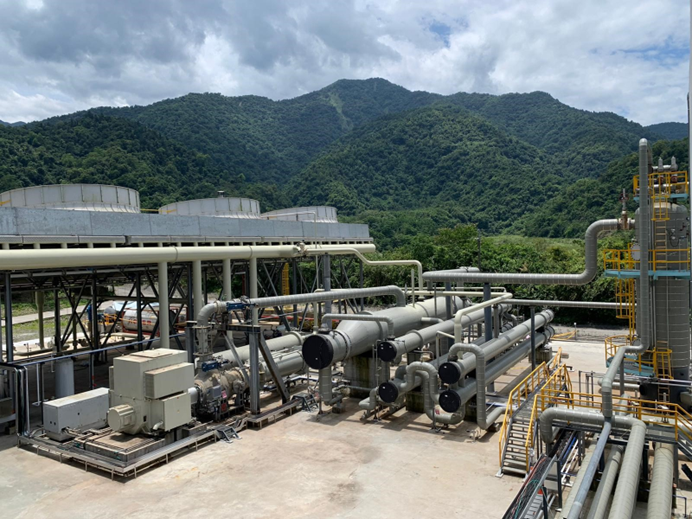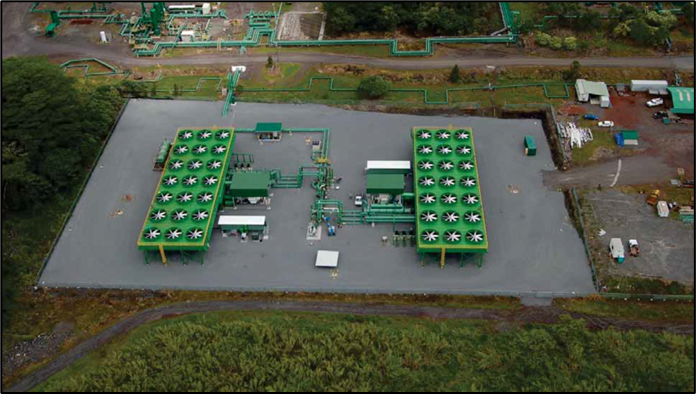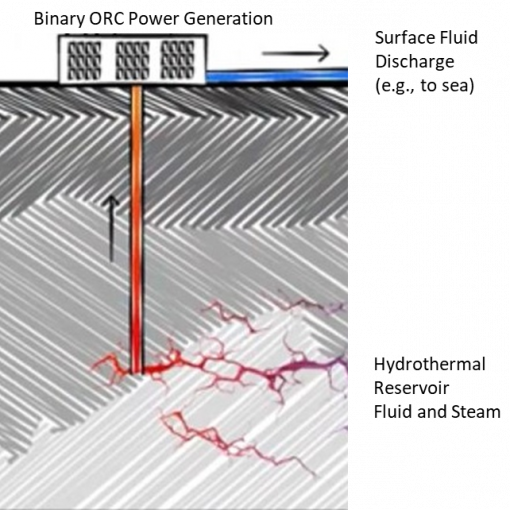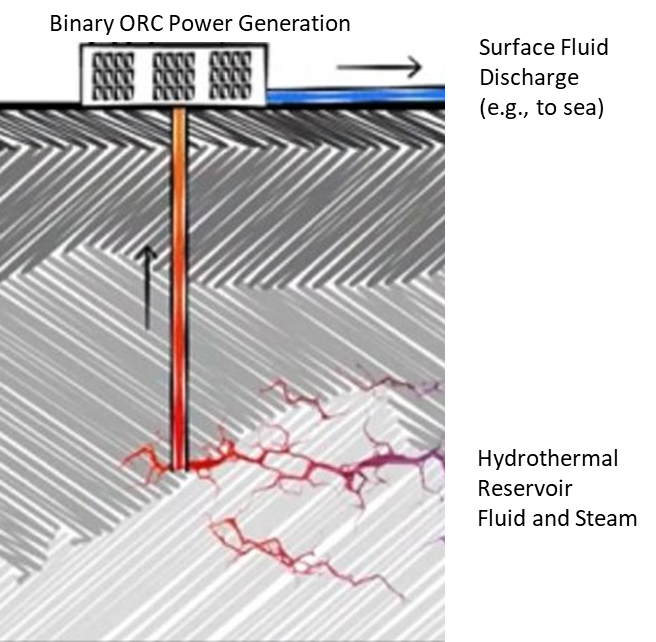
- Volcanic Geothermal Systems have significant heat resources that can be used to produce electricity. There are multiple technologies that have been used, but one solution that is very popular is the use of Binary Organic Rankine Cycle (Binary ORC) turbo expander power generators. Applicable for low, medium, or high-enthalpy geothermal developments.
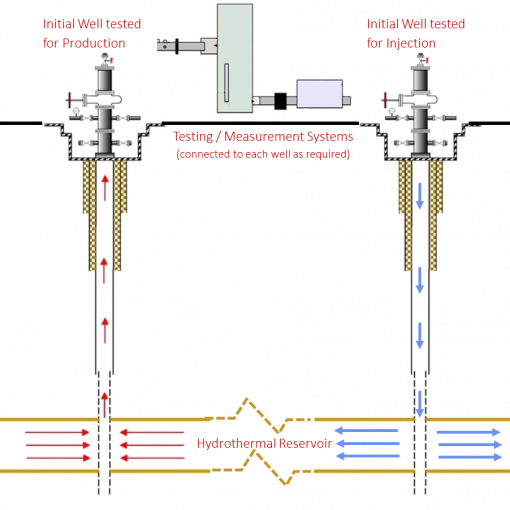
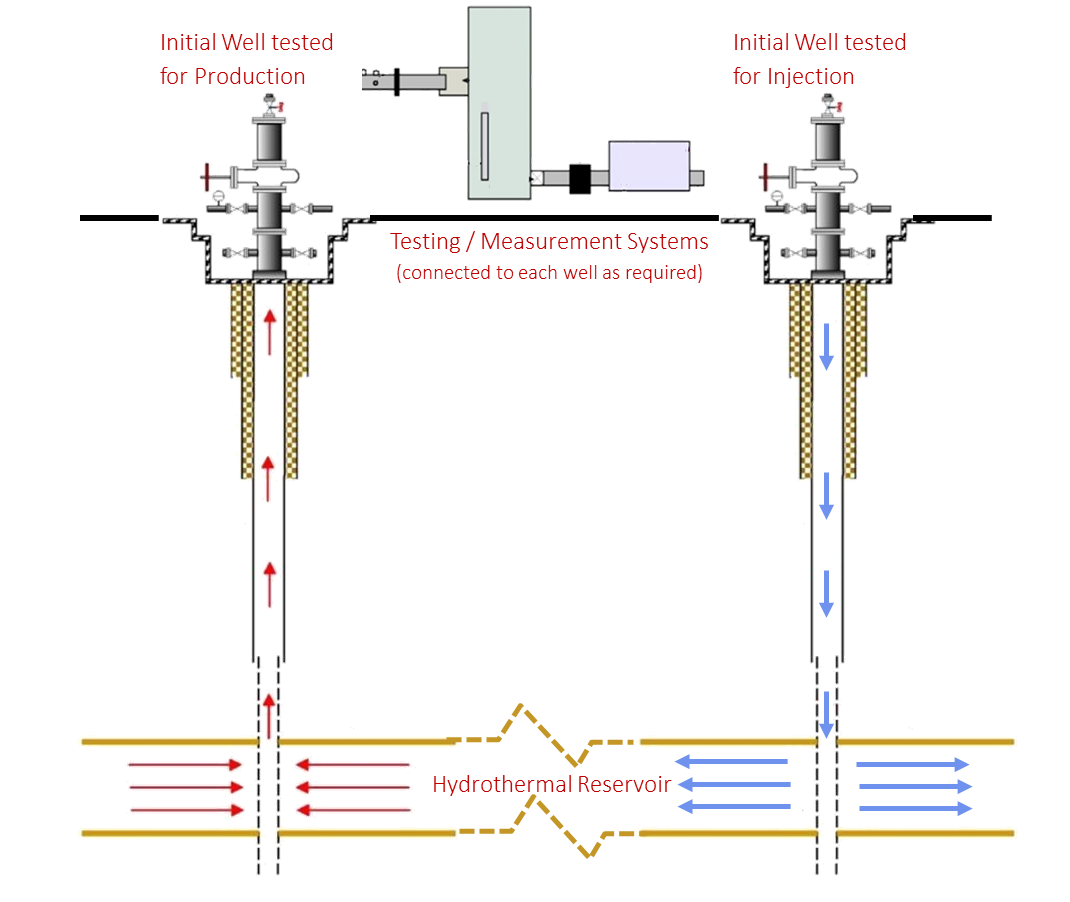
- The produced reservoir fluid is used, sometimes with heat exchangers if the fluid is overly corrosive, to heat a closed system process fluid (usually organic hydrocarbon, i.e., isobutane or isopentane, or refrigerants) that has boiling and condensation points matched to the expected geothermal resource temperatures. After heat extraction, the reservoir fluids are returned, now slightly cooled, to injection wells back down into the reservoir for the thermal cycle to continue.
- Well proven, simplified technology designs help minimise the need for complex manned operations and intensive maintenance. Access to large skilled workforces and frequent vendor support would be a logistical and financial challenge at remote volcanic systems.
- Modular designs would allow phased developments to match either phased or expanded geothermal opportunities or electrical utility grid expansions and capability. Modular designs would facilitate persistent, dispatchable power that can scale up and down to match grid requirements. Site infrastructure requirements would need to be minimised due to space and land access restrictions on remote volcanic systems.
- Eliminating emissions of non-condensable gases (NCG) from the reservoir fluids (that are typically greenhouse gases (GHG)) to avoid pollution risks or dangers is a significant benefit of this type of closed power generation system.
- Cooling technologies may be challenged by high temperatures and humidities, but there are multiple cooling solutions from air to water cooled.