


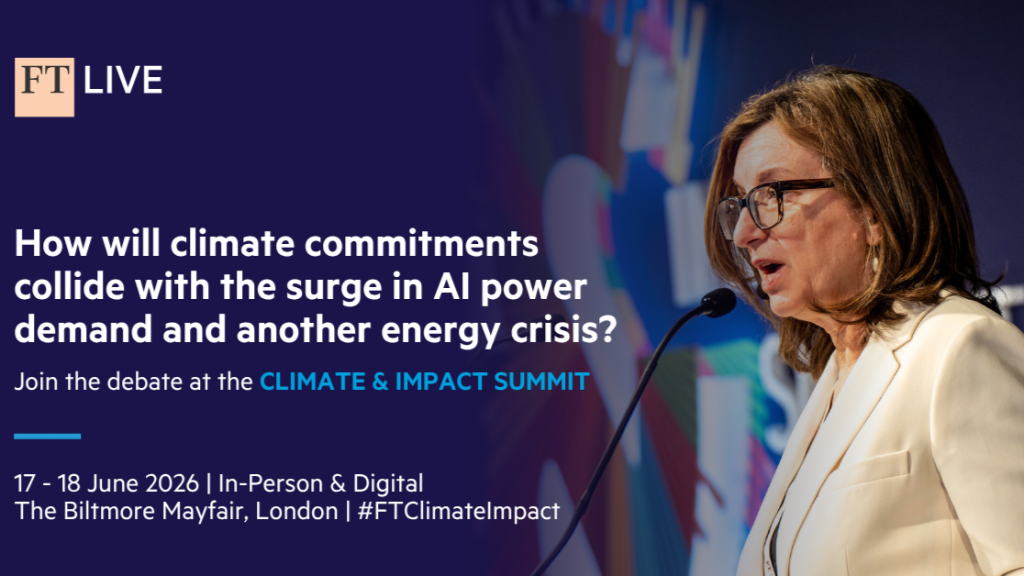
17 -18 June 2026 FT Climate and Impact Summit
AI’s Energy and Water Demands Are Outpacing Climate Commitments – What We Must Do Next
Impact Investment, Technology, Energy, AI, Defence and Media
As we head into Financial Times Climate & Impact summit in mid‑June 2026, the theme is impossible to ignore: #AI is growing faster than the world’s ability to power it sustainably.
Data‑centre electricity demand is set to triple by 2030, and water consumption for cooling is rising in parallel. Nations are discovering that their climate commitments – already ambitious – were never designed for the exponential curve of AI compute.
But this is not a story of limits. It’s a story of redesign.
If AI is going to scale without overwhelming grids, draining water systems, or derailing net‑zero pathways, we need a new architecture for digital infrastructure. Three solutions stand out as both credible and actionable.
1. Localisation: Build Compute Where Clean Energy Already Exists
For decades, we built data centres where energy was cheap and connectivity was strong. That era is over.
The new model is simple: Move compute to energy, not energy to compute.
Localisation means placing AI infrastructure directly on top of clean, abundant, climate‑secure energy sources – high solar radiation regions, hydropower basins, high‑wind corridors, and regions with natural cooling advantages.
This shift reduces:
- grid congestion
- transmission losses
- fossil‑backup reliance
- water stress in vulnerable regions
It also supports sovereign compute, especially for emerging economies seeking digital independence.
Localisation is no longer an efficiency strategy; it’s a climate‑alignment strategy.
2. Miniaturisation: Smaller Models, Smaller Footprint
The AI industry is finally confronting a truth it has avoided for years: bigger models are not always better models.
Miniaturisation is happening across three layers:
- Model miniaturisation – distillation, sparse architectures, retrieval‑augmented generation
- Hardware miniaturisation – edge accelerators, neuromorphic chips, photonic processors
- Data miniaturisation – curated datasets, synthetic data, efficient training loops
These innovations reduce energy consumption by 10 – 100×, cut cooling loads, and enable AI to run closer to the edge – where energy is cheaper, cleaner, and more resilient.
Miniaturisation is the only pathway that reduces demand at the source.
3. Intelligent Energy Use: AI That Optimises Its Own Consumption
The most transformative shift is this: AI can learn to manage its own energy footprint.
We are entering an era of energy‑intelligent AI, where systems automatically adjust their behaviour based on real‑time conditions:
- shifting workloads to periods of renewable surplus
- scaling models up or down based on task complexity
- predicting cooling needs and reducing water use
- throttling inference during grid stress
- routing compute to the lowest‑carbon region available
This is AI as an active participant in climate mitigation – not just a consumer of resources.
A New Climate‑Aligned AI Architecture
Taken together, these three shifts – #localisation, #miniaturisation, and #intelligent optimisation -form the blueprint for a future where AI growth and climate commitments reinforce each other rather than collide.
How do we build AI infrastructure that is not only powerful, but planet‑compatible? This is the conversation humanity must lead: Because the question is no longer whether AI will reshape the world. It’s whether we can reshape AI to fit the world we are trying to protect.
Stellae Energy William David Hartell Kristina Sevastianova
26 May 2021 Future Digital Twin

Wednesday 26th and Thursday 27th, is Future Digital Twin. If you would like to join us, follow the link below – there is no charge for this conference thanks to all the great sponsors and Adam Soroka –Cavendish Group International Ltd . Lots of interesting speakers and panels over the two days. Digital technologies and tools applicable to a range of industries including #oilandgas and #renewables to improve technical analyses and designs, construction and commissioning, start-up and operations, and maintenance.
We look forward to seeing you there.
#digitaltwin #digitaltransformation #iotdata #cloudbasedsolutions
20 May 2021 Leveraging Remote Inspection Tools and Technologies on FPSO Vessels – Key Considerations, Strategies and Solutions
An invitation to join us to discuss remote inspection tools and technologies for FPSO vessels – technology that is likely applicable to a wide range of remote offshore energy facilities.
Thanks to FPSO network and Altera Infrastructure for arranging and sponsoring this complimentary webinar. On the panel with me is Runar Kolseth Nyberg from Altera Infrastructure , Ehi Ataga from Shell , Bruno Farias from MODEC, Inc. , and Aya Kusumawardhani, PhD from Yinson
11 May 2021 IOT Solutions World Congress

Please visit IOT Solutions World Congress Digital Summit to hear William David Hartell from Stellae Energy, Purlalli Elisabetta from Eni and Nada Ahmed from Aker Solutions discuss what is needed to drive #transfromation within the #energyindustry. We talk about how we are exploiting disruptive technologies to make a difference.
Access the event here
https://lnkd.in/dXRFSrk
#energytransition #IOTsummit
30 March 2021 Houston Strategy Forum – Upstream Dynamics
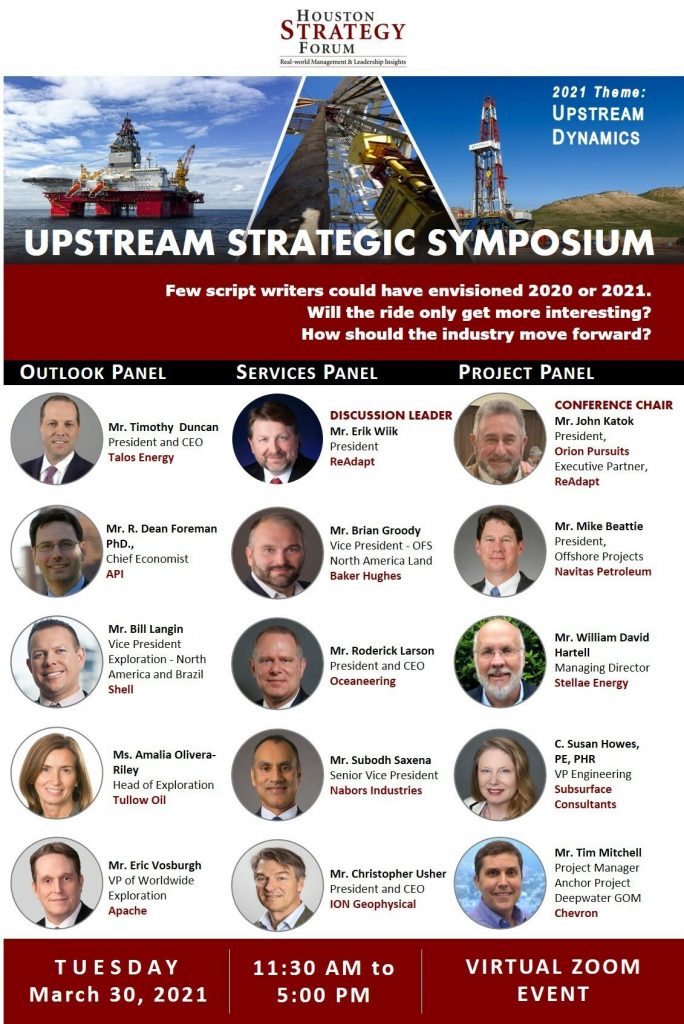
An interesting virtual symposium in Houston where experienced Upstream industry speakers on three panels (Outlook, Services, Project) interactively discussed and answered questions on the theme of “Upstream Dynamics”.
Thanks to Ravi Kathuria and John Katok for arranging this symposium and the Sponsors Cohegic CorporationUnited AirlinesCWT AgamaAd Westcott & WashingtonMatican Group, LLC
3 February 2021 Small Scale LNG Summit
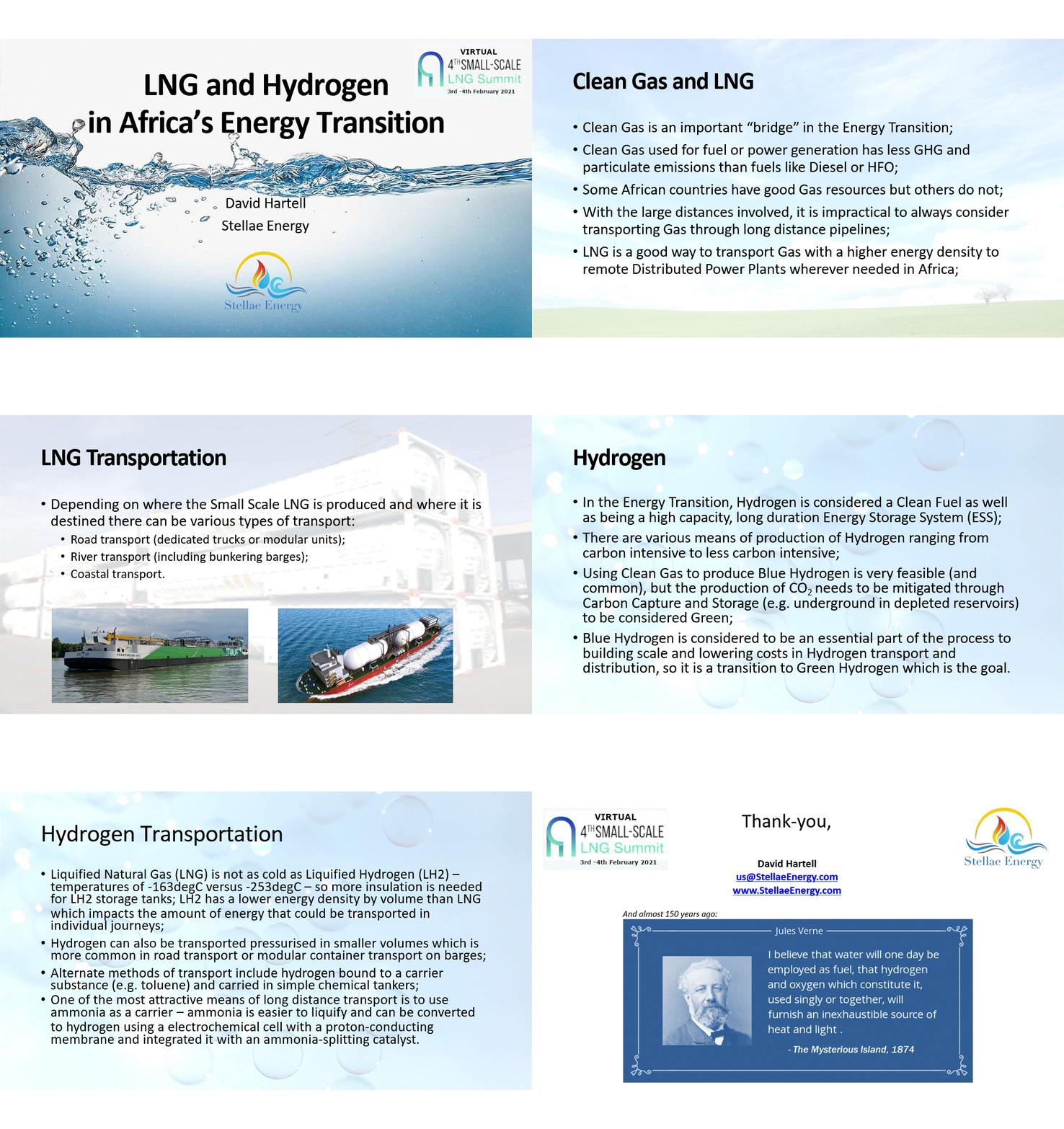
Africa is blessed with significant Clean Gas resources in many locations across the continent. With widespread energy poverty, more than 50% of the population needs increased electricity access, clean water, and improved sanitation. Clean Gas and its efficient long distance distribution through LNG is needed to help produce electricity. Economic small scale modular LNG plants are possible close to gas resources. LNG can be road or vessel transported to Distributed Power Plants. International sources of funding and finance should consider this need and the fact that average per capita GHG emissions here are only 20% of the global average. Africa is on a different part of the Energy Transition journey but Clean Gas is a good “bridge” to the future which should include Hydrogen.
#africaenergy #energytransition #lngindustry #hydrogen #energystorage #africaoilandgas
1 December 2020 FPSO Congress Africa
Navigating the Impact of the Global Pandemic and Oil Price Crisis to Advance FPSO Projects in Africa.

In this discussion, we have William David Hartell from Stellae Energy Ltd., Filipe Costa from Yinson and Woji Weli from BW Offshore.
19 November 2020 Digital Energy Leaders Summit
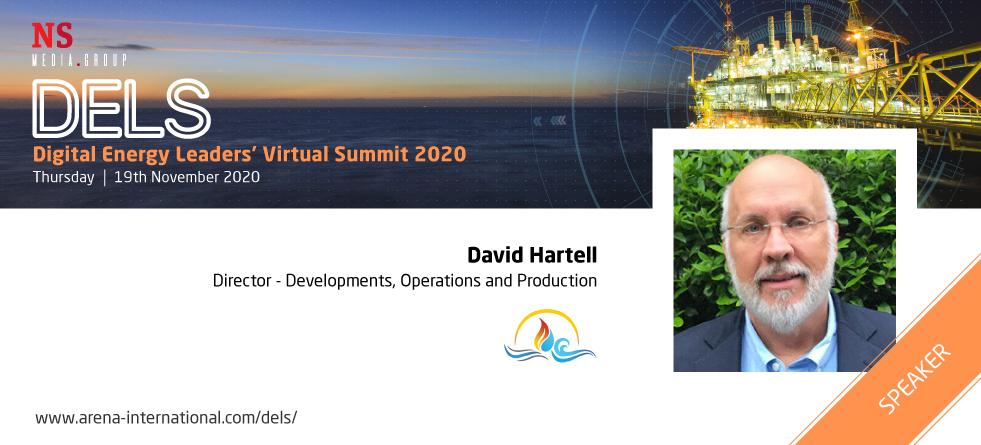
Looking forward to joining Carlos Eduardo Moro Fernandes at Digital Energy Leaders Virtual Summit 2020 this week – come join us and hear some great presentations and panel discussions #digitaltwin #digitaltransformation #dataanalytics #iotdevices
22 October 2020 Africa Upstream, LNG & Gas Summit
David will be attending the online Africa Upstream, LNG & Gas Summit this week on October 22nd, organised by IN-VR . Thank you Bureau Veritas Group and GLJ Ltd.
16 July 2020 Energy Transition – Hydrogen and Carbon Capture
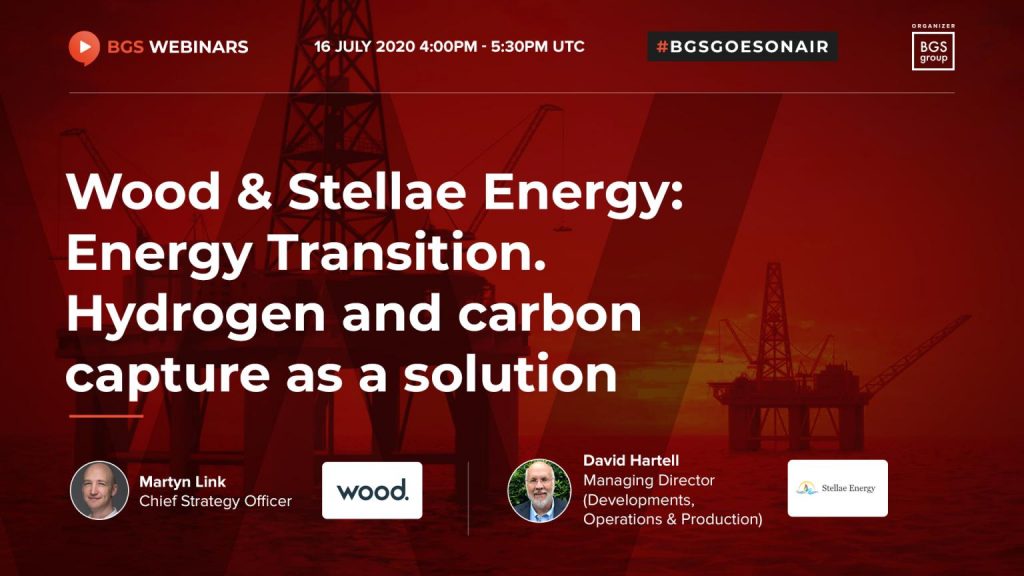
While the lockdown shows a significant reduction in daily global CO2 emissions, the Clean Energy Transition agenda becomes increasingly important for most of Oil&Gas players, especially in Upstream. BGS Group invited Chief Strategy Officer from Wood and Managing Director (Developments, Operations & Production) from Stellae Energy Ltd. to discuss these and many other questions on the free webinar.
Martyn Link (Chief Strategy Officer at Wood) and William David Hartell (Managing Director (Developments, Operations & Production) at Stellae Energy Ltd.) will go on the air with the discussion of the role and types of low carbon technologies that are key strategy questions for energy companies.